Private elementary school student progress should be shared clearly and regularly with parents. Schools can use written learning updates, teacher feedback, meetings, emails, phone calls, and classroom examples to show what a child is doing well and what they need to work on next.
Good communication should answer three simple questions:
Where is my child now? What are they doing well? What should they work on next?
For parents choosing a private elementary school in Vancouver, this is an important part of understanding how closely a school follows each child’s learning.
How Often Should Parents Hear About Student Progress?
In British Columbia, communication about learning should happen throughout the school year, not only at the end of each term.
Under the current B.C. K–12 Independent Schools Student Progress Reporting Policy, parents and students must receive at least five communications about learning during the school year. At least three must be written learning updates, including the year-end Summary of Learning. Two may be informal updates, such as conferences, emails, or phone calls.
Parents can read the full B.C. Independent Schools Student Progress Reporting Policy.
This means a good school should not wait until the final report card to tell a family that a child is struggling.
Communication should happen early enough for the teacher, student, and parents to work together.

What Information Should Parents Receive?
A useful learning update should tell parents more than whether their child is simply doing “good” or “bad.”
Parents should be able to understand:
| What Parents Need to Know | Example |
|---|---|
| Strengths | “She understands the main ideas when reading.” |
| Area for growth | “She needs more practice explaining her ideas in writing.” |
| Current progress | “She can solve two-digit addition problems independently.” |
| Next step | “The next goal is applying this skill to word problems.” |
| Learning habits | “He completes his work carefully but needs reminders to start independently.” |
| Home support | “Read together for 20–30 minutes and ask questions about the story.” |
B.C.’s reporting policy emphasizes descriptive feedback. This means feedback should explain the student’s strengths and identify clear goals for future growth rather than giving parents only a score.
That type of information is much more useful to a family.
What Does Good Parent-Teacher Communication Look Like?
Good parent-teacher communication at a private school should be clear, timely, and specific.
For example, imagine a Grade 2 student who normally reads confidently but begins having trouble understanding longer stories.
A teacher should not wait several months and simply write:
“Reading needs improvement.”
A better process might look like this:
- The teacher notices the change during classroom reading.
- The teacher checks which part is difficult.
- Extra reading support or practice is provided.
- The parent is informed about what the teacher has noticed.
- The teacher gives the family a simple way to practise at home.
- Progress is checked again.
The important part is the cycle of communication.
Notice → Support → Communicate → Monitor → Adjust
This helps prevent a small learning gap from becoming a much larger one.
How Does Columbia Academy Communicate With Parents?
At Columbia Academy, communication between families and the school is part of supporting student learning.
Parents are encouraged to speak with teachers and school administration when they have questions or concerns about their child’s education. Meetings can also be arranged so concerns can be discussed directly and privately.
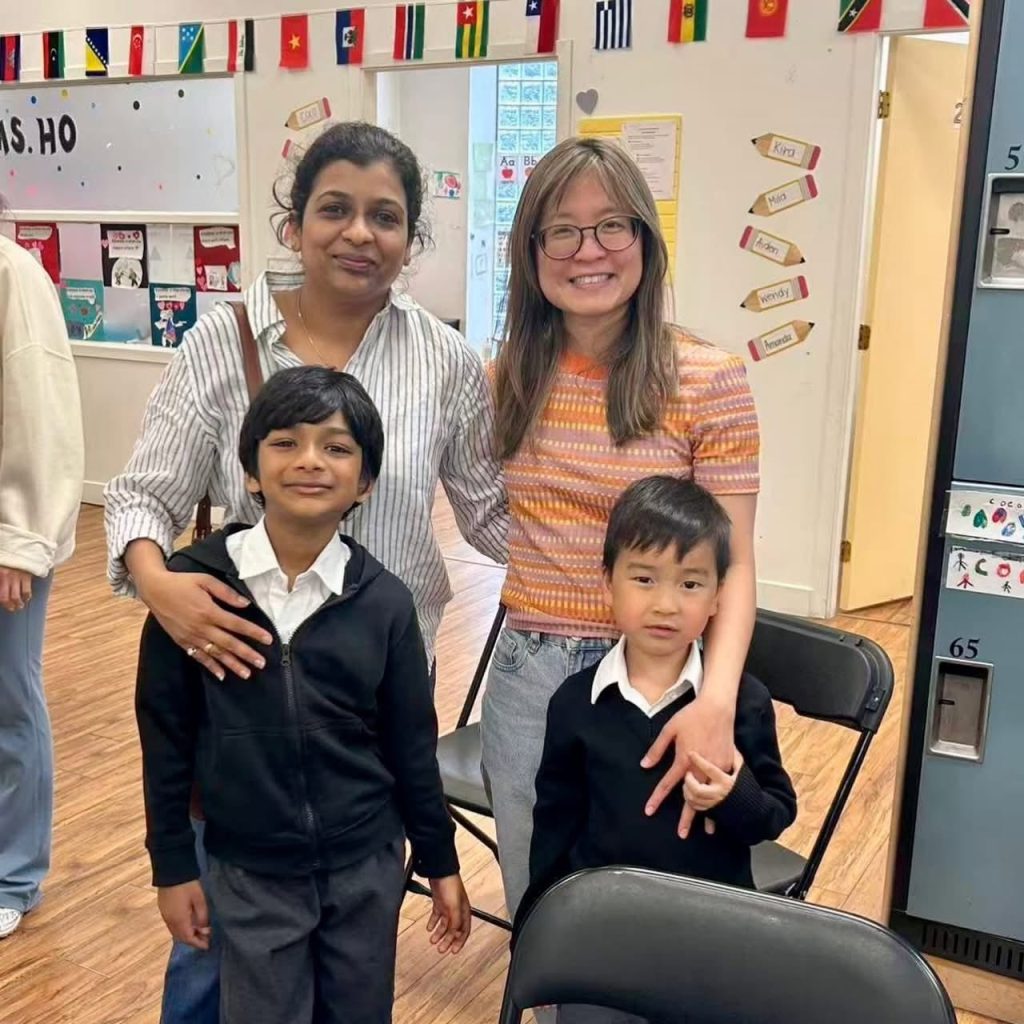
This matters because teachers see a child at school, while parents see things that may happen at home.
For example, a teacher may notice that a child is taking longer to complete writing tasks.
At home, the parent may notice that the same child has also started avoiding writing homework.
When these two pieces of information are shared, it becomes easier to understand what may be happening.
Parents who want to be more involved can also read our guide to parent involvement at Columbia Academy.
How Do Teachers Know Whether a Student Is Making Progress?
Progress is not measured by one test.
Teachers can gather information from many parts of the school day.
This may include:
- Classwork
- Reading
- Writing
- Math activities
- Questions and discussions
- Projects
- Homework
- Quizzes and assessments
- Teacher observations
- Student reflection
B.C.’s approach to classroom assessment encourages teachers to gather information over time and use ongoing feedback to help students understand their learning and set new goals.
Parents can learn more from the official B.C. classroom assessment resources.
This is especially important in elementary school.
A child may know the correct answer without fully understanding the idea. Another child may understand the concept but have difficulty explaining it in writing.
Teachers need to look beyond one number.
A Real Classroom Example: Reading Progress
Imagine a Grade 3 student who can read words correctly but cannot explain what happened in the story.
The teacher may ask the student to:
- Read a shorter section
- Explain what happened
- Describe a character
- Predict what may happen next
- Find evidence in the text
This helps the teacher see that the problem is not reading the words.
The child may need more help with reading comprehension.
The teacher can then give the parent a much more useful update:
“Your child reads accurately and confidently. Our next goal is to strengthen comprehension by explaining the main idea and supporting answers with details from the text.”
Now the parent knows exactly what the child is working on.
A Real Classroom Example: Math Progress
A similar situation can happen in math.
Suppose a student gets several multiplication questions wrong.
The teacher needs to find out why.
Does the student:
- Not understand multiplication?
- Understand multiplication but make calculation mistakes?
- Have trouble reading the question?
- Rush through the work?
- Understand the idea but need more practice?
The answer changes the support the child needs.
This is one reason regular classroom assessment and communication are important.
A parent should understand why the child is having difficulty, not only see a low score.
How Can Small Classes Improve Communication?
Smaller classes can help teachers become more familiar with individual students.
At Columbia Academy, K–7 classes have 15 students or fewer.
This gives teachers more opportunities to:
- Watch how students complete their work
- Ask individual questions
- Check understanding
- Notice changes in learning habits
- Give personal feedback
- Recognize when a child needs extra help
It can also make parent communication more specific.
Instead of:
“Your child is doing well.”
a teacher can discuss specific strengths, challenges, habits, and next steps.
If you are concerned about how much individual attention your child receives, our article about what parents can do when a child feels overlooked at school explores this issue in more detail.

How Are Learning Habits Communicated?
Academic skills are important, but they are not the only part of student progress.
Teachers may also notice how a student:
- Starts a task
- Stays focused
- Organizes materials
- Completes homework
- Works independently
- Asks for help
- Works with classmates
- Responds to feedback
These habits often affect academic performance.
For example, a student may understand math very well but regularly rush through assignments.
The learning issue may not be math.
The next goal may be slowing down and checking work carefully.
That is useful information for both the child and the parent.
How Do Homework and Reading Help Parents See Progress?
Daily routines also help families understand how their child is learning.
At Columbia Academy, students develop regular homework and reading habits from Kindergarten onward. Daily reading is part of the K–7 routine, while homework increases gradually as students get older.
Parents may notice changes such as:
- Reading becoming easier
- Stronger vocabulary
- Greater independence
- Homework taking less time
- Better organization
- Increased confidence
- A subject suddenly becoming difficult
These observations can be valuable when shared with a teacher.
Homework should therefore not only be about finishing a worksheet.
It can also help connect school learning and home communication.
What About Students Who Need Extra Learning Support?
Regular progress communication becomes even more important when a student is struggling.
If a child needs additional support, parents should understand:
What has the teacher noticed?
What support is being provided?
What goal is the child working toward?
Is the support helping?
What should happen next?
For students with diverse learning needs, Columbia Academy may develop an Individual Education Plan when appropriate. These plans can include individual goals, adaptations, services, and ways to track progress. Parents, teachers, and relevant professionals may work together in this process.
The goal is for parents to be part of the conversation rather than learning about a problem after decisions have already been made.
What About Students Learning English?
For a student learning English, progress may look different in different areas.
A child might understand a science idea very well but still need help explaining it in English.
Teachers should be able to separate:
Understanding the subject
from
Ability to express that understanding in English.
For example, a teacher may tell a parent:
“Your child understands the science concepts and participates well in hands-on activities. We are now working on the English vocabulary needed to explain these ideas in complete sentences.”
That gives a much clearer picture of the student’s real progress.
It also helps families know what to practise at home.
Should Parents Only Hear About Problems?
No.
Parent communication should not happen only when something goes wrong.
Families should also hear about:
- Academic growth
- New strengths
- Improved confidence
- Better learning habits
- Strong projects
- Social development
- Independence
- Leadership
- Creativity
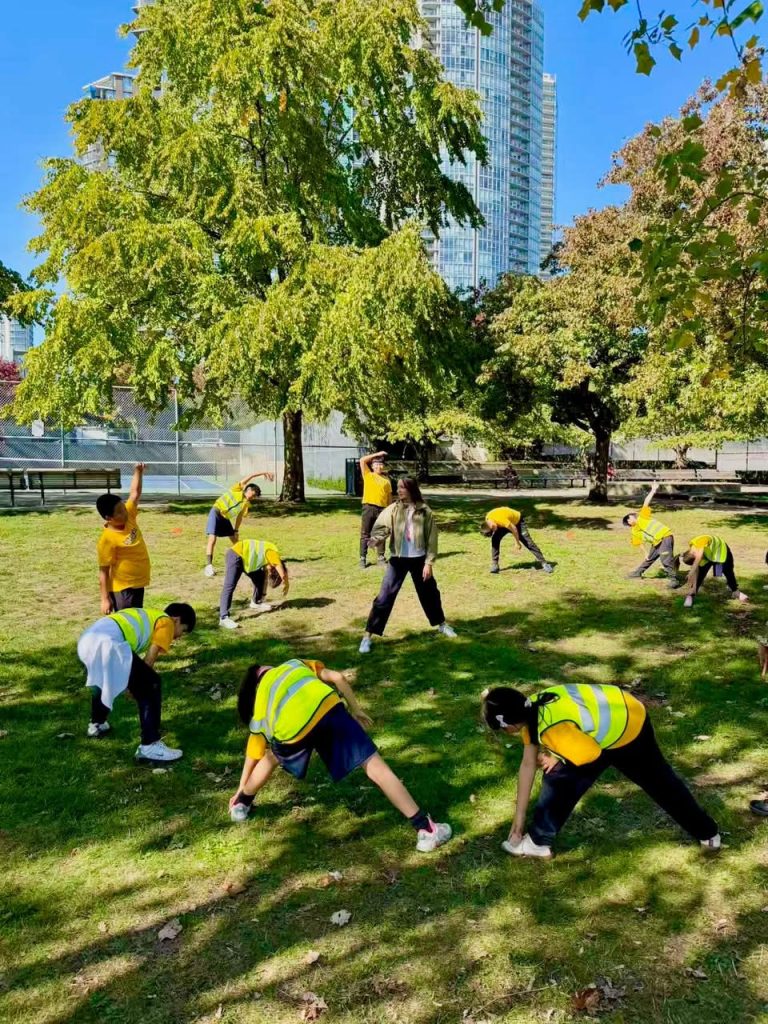
At Columbia Academy, the K–7 experience includes the BC Curriculum along with French and Chinese learning from Kindergarten, music, outdoor learning, art, physical education, meditation, yoga, clubs, and other activities.
Teachers therefore have opportunities to see different sides of a child.
A student who is quiet during math may become confident during music.
Another student may show leadership during outdoor learning or a group project.
Progress is broader than a test score.
How Can Students Take Part in Reporting Their Own Progress?
Children should gradually learn to understand their own learning.
Instead of always hearing:
“The teacher says I need to improve.”
students can begin asking:
“What am I good at?”
“What am I working on?”
“What is my next goal?”
The current B.C. independent-school reporting policy includes student self-reflection on the Core Competencies and student goal setting as part of written learning updates.
This helps children take more responsibility as they get older.
For a young student, a goal might be:
“I will remember to check my writing for capital letters.”
For an older elementary student:
“I will use evidence from the text when I answer reading questions.”
Simple goals help children see that learning is something they can improve step by step.
What Should Parents Ask at a Parent-Teacher Meeting?
A useful parent-teacher meeting should go beyond:
“Is my child doing okay?”
Parents can ask:
- What is my child’s strongest academic area?
- Where do they need the most growth?
- Are they working at the expected level?
- Have you noticed any recent changes?
- How do they participate in class?
- Do they ask for help when they need it?
- How independent are they?
- What is their next learning goal?
- What can we do at home?
- When should we check progress again?
One especially useful question is:
“Can you show me an example?”
Seeing actual student work can make feedback much easier to understand.
What If a Parent Has a Concern Between Report Cards?
Parents should not feel that they need to wait for the next formal report.
If you notice a continuing problem at home, contact the teacher.
For example:
“My child has been spending almost an hour on a math assignment that normally takes 20 minutes. Have you noticed any difficulty with this topic in class?”
This gives the teacher useful information without assuming the cause.
The teacher can then compare what is happening at school and at home.
At Columbia Academy, parents are encouraged to discuss concerns about their child’s education directly with teachers and school administration.
What Should Parents Look for When Choosing a School?
When visiting a private elementary school in Vancouver, ask how the school communicates learning.
Do not only ask:
“Do you send report cards?”
Instead ask:
“How will I know how my child is doing between report cards?”
A strong answer should explain:
- How often families receive updates
- What written reports contain
- How teachers communicate concerns
- How parents can contact teachers
- How learning goals are shared
- How students who are struggling are monitored
- How parents can help at home
This tells you much more about the school’s relationship with families.
Parent Communication at Columbia Academy’s K–7 Program
Columbia Academy is a private K–12 school in downtown Vancouver and a BC-certified school.
Our K–7 Yaletown Campus is located at 792 Beatty Street in downtown Vancouver.
Small classes help teachers become familiar with each student, while regular communication helps families stay connected to their child’s learning.
The K–7 program also combines academics with languages, music, outdoor learning, mindfulness, and activities that support the development of the whole child.
Families can explore the Columbia Academy K–7 private elementary school program to learn more about academics, student life, and admissions.
Frequently Asked Questions
How often do parents get progress reports at private schools in BC?
Under B.C.’s current independent-school reporting policy, parents and students must receive at least five communications about student learning during the school year. At least three are written learning updates, including a year-end Summary of Learning, while two may be informal updates such as conferences, emails, or phone calls.
How do private schools communicate student progress?
Private schools may use written learning updates, descriptive feedback, parent-teacher meetings, emails, phone calls, classroom work, and conversations about learning goals.
What should parents ask at a parent-teacher conference?
Ask about your child’s strengths, areas for growth, current learning level, classroom habits, next goals, and what you can do at home. Asking to see examples of student work can also help.
How can parents tell if their child is making progress?
Look for changes over time. A child may read more fluently, solve more complex problems, complete work more independently, explain ideas more clearly, or show greater confidence.
Should a teacher contact parents before a report card if a child is struggling?
Good communication should be timely. B.C.’s independent-school policy states that communication about learning should be ongoing and responsive to student needs, allowing families and schools to work together early.
Final Answer: How Should Student Progress Be Communicated?
Private elementary school student progress should be communicated throughout the year, not only through a final report card.
Parents should receive clear information about:
what their child can do, where they need support, and what they should work on next.
The strongest communication happens when teachers, parents, and students all take part.
At Columbia Academy, small K–7 classes help teachers know students closely, while direct communication with families supports academic progress, learning habits, and individual needs.
For families looking for a private elementary school in Vancouver, ask how the school communicates before you enroll. A school should be able to clearly explain how you will know when your child is doing well—and how you will know when they need help.
If Columbia Academy’s smaller K–7 learning environment feels like the right fit for your child, explore the program and contact admissions early. Class sizes are intentionally small, so space can be limited.