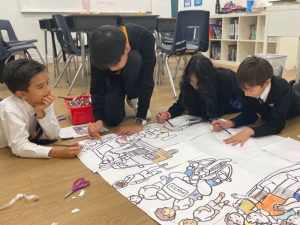
Learning support at a private elementary school helps children get the right support when learning becomes difficult. This can include extra explanation, different teaching methods, more practice, English language support, or an individual learning plan.
At Columbia Academy, learning support starts with knowing each child well. Small K–7 classes help teachers notice when a student needs extra help, more practice, or a different way to understand a lesson.
What Is Learning Support at a Private Elementary School?
Learning support is not only for children with a diagnosed learning difference.
Many students need extra help at some point in elementary school.
A child may:
- Find reading difficult
- Need more time with writing
- Struggle with a math concept
- Be learning English
- Have trouble staying focused
- Need help organizing schoolwork
- Learn better through pictures or hands-on activities
- Need more challenging work
Good learning support starts by asking:
What does this child understand, where are they having difficulty, and what can we change to help?
The BC Curriculum gives teachers flexibility in how students learn while keeping clear learning goals.
This allows teachers to use different strategies for different students.

How Do Private Elementary Schools Support Students Who Are Struggling?
There is no one learning strategy that works for every child.
A teacher may change the way a lesson is explained, provide extra practice, break a task into smaller steps, or use visual and hands-on examples.
For example:
| Student Need | Possible Learning Support |
|---|---|
| Reading is difficult | Guided reading and extra practice |
| Math is confusing | Visual examples and step-by-step teaching |
| English is developing | Vocabulary and language support |
| Student loses focus | Clear routines and shorter learning steps |
| Student learns quickly | More challenging activities |
| Student has identified learning needs | Adaptations or an IEP when appropriate |
The key is not simply giving students more work.
The goal is to find what is stopping the child from learning successfully and respond to that need.
Why Small Classes Can Help With Learning Support
Small classes can make it easier for teachers to see how each student is learning.
Imagine a Grade 3 student who starts having difficulty with multiplication.
The student may complete some questions correctly but still not understand the main idea.
In a smaller classroom, the teacher has more chances to:
- Ask the student how they solved the problem
- Notice where the confusion begins
- Explain the idea in another way
- Give extra practice
- Check again later to see if the student understands
At Columbia Academy, K–7 classes have 15 students or fewer.
This helps teachers become familiar with each student’s learning habits, strengths, and areas that need more support.
If class size is important to your family, read our guide to average class sizes at private elementary schools in Vancouver.

Learning Support Should Not Mean Lower Expectations
Helping a child does not always mean making the work easier.
Sometimes the learning goal stays the same, but the way the student reaches that goal changes.
For example, a student may still be expected to understand the same math concept as the rest of the class.
However, the teacher might use:
- Pictures
- Number lines
- Physical objects
- Smaller learning steps
- Extra examples
- More time
- One-to-one explanation
The BC Inclusive Education resources support the idea that students may need different strategies, adaptations, or services to take part successfully in learning.
The goal is to help students move forward while still giving them meaningful academic expectations.
How Learning Support Works at Columbia Academy
Columbia Academy’s K–7 program follows the BC Curriculum and is taught by BC-certified teachers. Students study English Language Arts, Math, Science, Social Studies, Career Education, Physical and Health Education, ADST, French, Music, Art, and Mandarin opportunities.
Learning support often begins inside the regular classroom.
Teachers can watch how students respond to lessons, review their work, ask questions, and adjust instruction when a child needs more help.
A Reading Example
A student may be able to read all the words in a story but still have trouble understanding what the story means.
Instead of simply asking the child to read it again, the teacher may:
- Read a shorter section together
- Explain important words
- Ask simple questions
- Use pictures
- Connect the story to something familiar
- Ask the student to explain the story in their own words
This helps the teacher understand whether the challenge comes from vocabulary, comprehension, fluency, or something else.
A Math Example
A student may know how to copy the steps in a math problem but not understand why the answer works.
The teacher might use counters, drawings, number lines, or real-life examples.
For example, fractions may be easier to understand when students can see and divide real objects instead of only looking at numbers on a page.
These small changes can make a big difference.
How Does Columbia Academy Support Students Learning English?
Some children understand an idea but cannot yet explain it clearly in English.
That does not always mean they do not understand the lesson.
For example, before reading a science passage, a teacher may explain important words first.
The student can then focus on the science idea rather than trying to understand every new English word at the same time.
Teachers may also use:
- Pictures
- Examples
- Repeated instructions
- Vocabulary practice
- Shorter explanations
- Questions to check understanding
In small classes, teachers have more opportunities to see when an English learner needs extra explanation.
This can make ESL support in elementary school more natural and connected to regular classroom learning.
What Is an IEP?
Some students need a more formal learning plan.
An Individual Education Plan, or IEP, describes the support a student may need to learn successfully.
An IEP can include:
- Individual learning goals
- Adapted teaching strategies
- Changes to learning materials
- Assessment accommodations
- Support services
- Ways to measure progress
At Columbia Academy, IEPs may be developed for students with diverse learning needs. Parents, teachers, and relevant professionals can work together when planning the student’s goals and support.
This is important because learning support should not happen separately from the family.
Parents often know things about their child that may not be immediately visible at school.
Does Every Child With an IEP Need a Different Curriculum?
No.
Some students can work toward the regular BC Curriculum while receiving adaptations.
For example, a student may:
- Have more time for a task
- Use different learning materials
- Receive more teacher support
- Answer questions in a different format
- Complete work in smaller sections
Other students may require more individualized goals.
The type of support depends on the child.
Does Columbia Academy Provide Specialized Support for Every Learning Need?
It is important for schools to be clear about this.
Columbia Academy works to support students with diverse learning needs through teachers, school staff, parent collaboration, and student support planning.
The school may also use a Student Support Team to monitor a student’s progress and adjust the learning plan when needed. However, Columbia Academy cannot promise that a specialized professional will be available for every type of learning need.
If your child already has:
- An IEP
- A learning assessment
- A diagnosis
- Significant behavioural needs
- Significant academic support needs
talk with the school before applying.
Share as much information as possible.
This allows the school and family to decide whether Columbia Academy can provide the level of support the child needs.
This conversation is better to have before enrollment, not after the school year begins.
Why Parent Communication Matters
Parents should not find out at the end of the year that their child has been struggling for months.
Good learning support includes regular communication between school and home.
At Columbia Academy, parent involvement is part of the support process. Families are encouraged to communicate with teachers and the school when they have concerns about their child’s learning.
A useful conversation with a teacher should help parents understand:
- What their child is doing well
- Where their child is having difficulty
- What the teacher is doing to help
- Whether the support is working
- What parents can practise at home
- What the next goal will be
The Government of British Columbia’s student progress reporting policy for independent schools also emphasizes ongoing communication about student learning.
How Daily Homework and Reading Build Strong Learning Habits
Learning support is not only something that happens after a child starts falling behind.
Good daily habits can also prevent learning gaps from becoming larger.
At Columbia Academy, students complete daily reading and age-appropriate homework.
The amount increases gradually as students move through the grades. Kindergarten and Grade 1 students begin with shorter homework periods, while older students build greater independence and responsibility. Daily reading is part of the routine across K–7. 2025-2026-CA-Elementary-Handboo…
These routines help students practise:
- Reading
- Vocabulary
- Focus
- Responsibility
- Time management
- Independent learning
The purpose is not only to finish assignments.
It is to help children develop learning habits they can use throughout school.
Supporting Focus and Confidence
Academic learning is only one part of student success.
Children often learn better when they feel calm, safe, and confident.
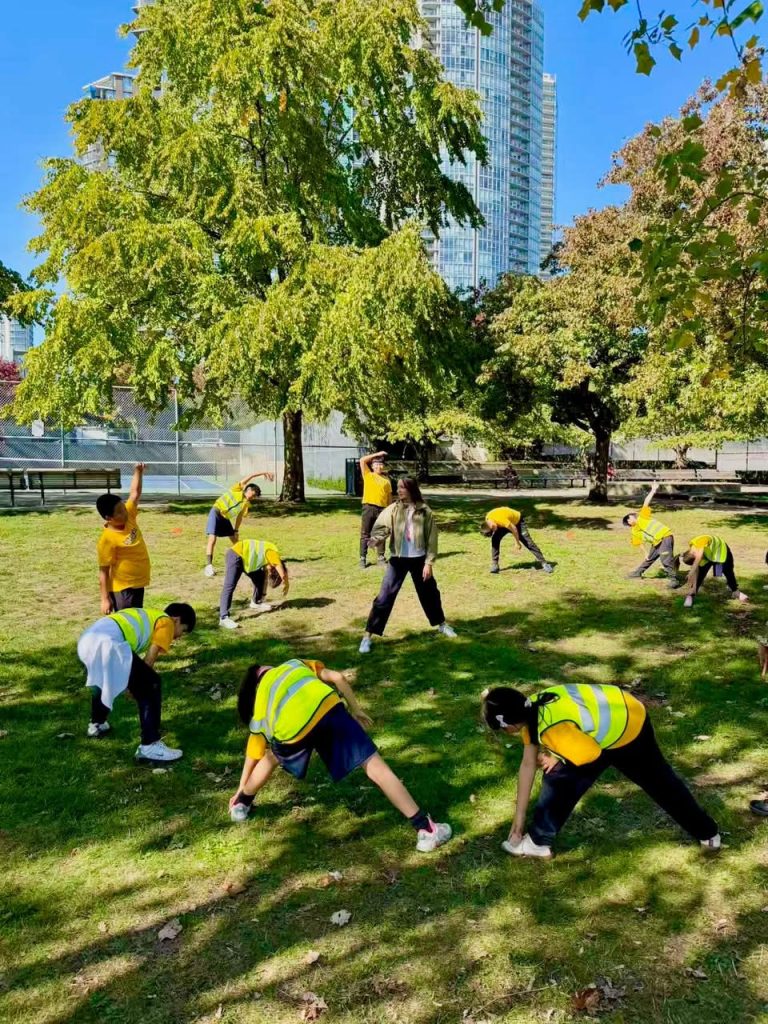
Columbia Academy includes mindfulness in the school day. Students have regular opportunities to pause, reflect, and refocus.
The K–7 program also includes:
- French and Chinese learning from Kindergarten
- Music, including three instruments from Kindergarten
- Weekly outdoor learning
- Meditation and yoga
- Art
- Physical education
- Clubs and activities
These experiences give students different ways to develop confidence, creativity, communication, and concentration.
They also give teachers more opportunities to see a child’s strengths outside traditional academic work.
What If My Child Is Being Overlooked at School?
Not every child who is struggling will ask for help.
Some children become very quiet.
Others may continue completing their work even when they do not fully understand it.
Parents may notice signs at home first.
For example, a child may:
- Say they are “bad at math”
- Avoid reading
- Take much longer to finish homework
- Become upset before school
- Lose confidence
- Stop asking questions
- Say they do not understand the teacher
- Feel that no one notices when they need help
One difficult week does not always mean there is a serious problem.
But if the pattern continues, parents should speak with the teacher.
You can also read our guide about what to do when a child feels overlooked at school.
What Should Parents Ask About Learning Support?
When visiting a private elementary school in Vancouver, do not only ask:
“Do you provide learning support?”
Ask more specific questions.
For example:
- What happens if my child begins falling behind?
- How do teachers notice learning difficulties?
- What help happens inside the classroom?
- How do you support students learning English?
- How do you support advanced students?
- How do teachers communicate concerns to parents?
- Can you support students with IEPs?
- What specialized support is available?
- What support is not available?
- How do you know whether the support is working?
A school should be able to answer these questions clearly.
A K–7 Private Elementary School in Downtown Vancouver
Columbia Academy is a private K–12 school in downtown Vancouver.
Our K–7 Yaletown Campus is located at 792 Beatty Street, close to public transit and many downtown Vancouver neighbourhoods. 2025-2026-CA-Elementary-Handboo…
The elementary program serves local families and also welcomes students from international backgrounds.
Parents can explore our K–7 private elementary school program in Vancouver to learn more about academics, languages, music, student life, and admissions.
Frequently Asked Questions
How do private elementary schools support struggling students?
Private elementary schools may provide extra explanation, guided practice, small-group instruction, adapted materials, ESL support, parent communication, or individual learning plans. The exact support depends on the child and the school’s available resources.
Does a private elementary school provide IEP support?
Some private schools do. Columbia Academy can develop IEPs for students with diverse learning needs when appropriate. Families should discuss their child’s needs with the school before enrollment.
How can small classes help a child who needs learning support?
Small classes give teachers more opportunities to watch student progress, answer questions, provide feedback, and notice when a child needs extra help.
How do schools support ESL students in elementary school?
Teachers may explain vocabulary, use visuals, repeat instructions, provide language practice, and regularly check understanding while the student continues learning regular academic subjects.
What learning support should parents look for in a private school?
Parents should look for early identification of difficulties, clear communication, flexible teaching, progress monitoring, realistic information about available resources, and a strong relationship between teachers and families.
Final Answer: What Does Good Learning Support Look Like?
Learning support at a private elementary school should help teachers understand how each child learns and respond when that child needs more help.
For one student, this may mean a different explanation or more reading practice. For another, it may mean ESL support, classroom adaptations, or an IEP.
At Columbia Academy, small K–7 classes help teachers know students well and provide more individual attention. The school follows the BC Curriculum and supports inclusive learning through classroom strategies, individualized planning, and communication with families.
At the same time, every child’s needs are different. Families with significant learning-support needs should speak with the school before enrollment so everyone can decide whether the program is the right fit.
If you are looking for a private elementary school in Vancouver with a small-class K–7 environment, learn more about Columbia Academy’s program and speak with the admissions team early. Class sizes are intentionally small, so available spaces can be limited.