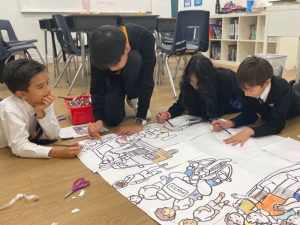
Kindergarten readiness BC is not about making sure a child can already read, write, or do formal math before the first day of school. A child is better prepared when they can communicate basic needs, follow simple routines, try tasks independently, interact with other children, and feel curious about learning.
In British Columbia, Kindergarten is a full-day, play-based program. Children continue building literacy, numeracy, social, emotional, physical, and communication skills after they start school.
So parents do not need to turn preschool into Grade 1.
The goal is to help your child feel ready to learn, ready to participate, and ready to become more independent.
Kindergarten Readiness BC: What Skills Matter Most?
There is no single test that every child must pass before starting Kindergarten.
Children develop at different speeds.
Some children may already recognize many words. Others may be confident with numbers. Some may be very social, while others need more time to feel comfortable in a new group.
A simple way to think about Kindergarten readiness is through five areas:
| Readiness Area | Helpful Skills Before Kindergarten |
|---|---|
| Independence | Dressing, eating, washing hands, managing belongings |
| Communication | Expressing needs, listening, answering simple questions |
| Social-emotional | Taking turns, sharing space, managing small frustrations |
| Early literacy | Enjoying books, noticing letters and sounds, talking about stories |
| Early numeracy | Counting objects, comparing amounts, noticing shapes and patterns |
These are helpful starting skills, not entrance requirements.

Does My Child Need to Read Before Kindergarten?
No. A child does not need to know how to read before starting Kindergarten in BC.
Kindergarten is part of the child’s learning journey.
It is helpful if children have had positive experiences with:
- Looking at books
- Listening to stories
- Talking about pictures
- Recognizing their own name
- Hearing rhymes
- Noticing letters
- Talking about what happened in a story
These activities build early literacy without putting pressure on a child to become a fluent reader before school begins.
B.C.’s curriculum places literacy at the centre of learning, but literacy includes much more than simply reading words. It also includes understanding and communicating ideas in oral, written, visual, digital, and other forms.
What Can Parents Do at Home?
One of the easiest things you can do is read together every day.
Ask simple questions such as:
- What do you think will happen next?
- Who is your favourite character?
- Why is the character sad?
- Can you find the letter that your name starts with?
- What happened at the beginning of the story?
You do not need worksheets.
Talking about books is already helping your child develop language, vocabulary, listening, and comprehension.
At Columbia Academy, daily reading continues after students enter school. Regular reading habits are part of the K–7 learning routine.
What Math Should a Child Know Before Kindergarten?
Children do not need to know addition tables or complete formal math worksheets before Kindergarten.
It is more useful for them to begin understanding numbers and quantities through everyday life.
For example, your child might practise:
- Counting toys
- Counting steps
- Comparing which group has more
- Sorting objects by size or colour
- Recognizing simple shapes
- Finding patterns
- Sharing snacks equally
- Using words such as more, less, bigger, smaller, first, and last
B.C.’s Kindergarten Mathematics curriculum develops early number sense, patterns, measurement, spatial thinking, and problem solving.
The province’s Kindergarten mathematics learning pathway also shows that skills such as counting quantities, recognizing numbers, and understanding small groups of objects are developed during Kindergarten.
That distinction is important.
These are learning goals—not a checklist children must master before their first day.
Independence May Be More Important Than Parents Expect
Academic skills often receive the most attention when parents think about school readiness.
But everyday independence can make a major difference to a child’s first school experience.
Before Kindergarten, help your child practise simple tasks such as:
- Putting on a jacket
- Opening a lunch container
- Carrying a backpack
- Putting belongings away
- Washing and drying their hands
- Using the bathroom independently when developmentally appropriate
- Cleaning up after an activity
- Asking an adult for help
Children do not have to do everything perfectly.
The important skill is being willing to try before immediately asking an adult to do it for them.
For example, instead of putting on your child’s jacket every morning, give them time to try.
Small moments like this build confidence.
Can My Child Follow Simple Routines?
A Kindergarten classroom includes many transitions.
Children may need to:
Come inside → put away belongings → sit with the class → listen → move to an activity → clean up → prepare for the next activity.
A child does not need to know a school’s exact routine before arriving.
But experience following simple routines at home can help.
Parents can practise:
“First put your shoes away. Then wash your hands. Then come to the table.”
This teaches children to listen, remember steps, and finish a small task.
These skills support the Personal and Social Core Competencies that are part of B.C.’s curriculum. The province describes these competencies as developing from early childhood and continuing throughout school and life.
Social Skills for Starting Kindergarten
Kindergarten may be one of the first times a child spends a full school day with a larger group of children.
Useful early social skills include:
- Taking turns
- Waiting briefly
- Sharing space and materials
- Listening when another person speaks
- Joining an activity
- Asking to play
- Asking an adult for help
- Understanding that other children have different ideas
- Using words when there is a small disagreement
A five-year-old will not do all of these things perfectly.
That is normal.
Kindergarten itself helps children develop these skills.
B.C.’s Kindergarten Physical and Health Education curriculum includes learning about ourselves and others, caring behaviours, healthy relationships, and physical, mental, and emotional well-being.
What About Emotional Readiness?
Starting Kindergarten is exciting.
It can also feel very big to a five-year-old.
A child may worry about:
- Being away from a parent
- Finding the bathroom
- Making friends
- Not knowing the teacher
- Getting something wrong
- Not knowing what to do
Parents can prepare children by talking about school in a calm and positive way.
Instead of saying:
“Don’t worry. There’s nothing to be scared of.”
try:
“It’s normal to feel a little nervous when something is new. Your teacher will help you learn what to do.”
This teaches children that uncomfortable feelings are manageable.
Help Your Child Name Feelings
Practise simple words such as:
happy, worried, frustrated, excited, sad, nervous, angry, proud.
When children can explain what they are feeling, it can be easier for an adult to help them.
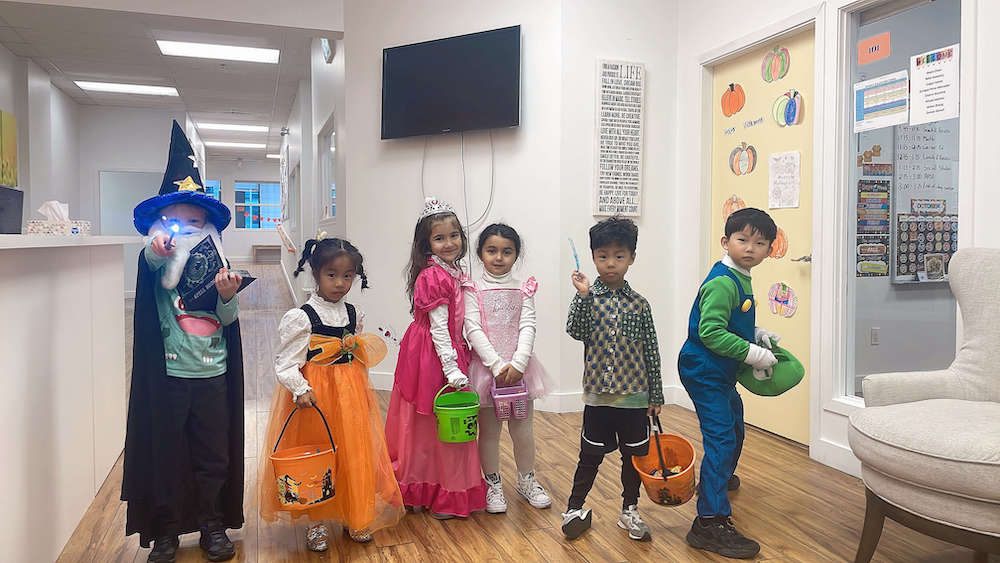
Does My Child Need to Know How to Write?
Children do not need perfect handwriting before Kindergarten.
However, activities that build hand strength and coordination can be helpful.
Try:
- Drawing
- Colouring
- Painting
- Building with blocks
- Playing with modelling clay
- Using child-safe scissors
- Completing puzzles
- Picking up small objects
- Drawing lines and shapes
If your child is interested in writing their name, encourage them.
But avoid turning it into a stressful daily test.
The goal before Kindergarten is to make children comfortable using their hands to create and explore.
Formal writing skills continue to develop at school.
Communication Skills Before Kindergarten
A child should gradually be able to communicate basic needs to adults.
For example:
“I need help.”
“I don’t understand.”
“Can I go to the bathroom?”
“I lost my water bottle.”
“I feel sick.”
Children who are shy may find this harder.
Parents can practise these situations through simple role-play at home.
You can pretend to be the teacher and ask:
“What would you say if you couldn’t open your lunch?”
Then let your child practise asking for help.
Communication is one of the three major Core Competencies in B.C.’s curriculum, alongside Thinking and Personal and Social competencies.
Should My Child Be Able to Sit Still for a Long Time?
No.
Kindergarten-aged children are still developing attention and self-control.
B.C.’s full-day Kindergarten model is play-based and is designed to support several parts of child development, including physical, social, emotional, language, and cognitive development.
Parents can still help children slowly build listening and attention.
Try activities such as:
- Reading a short story together
- Completing a puzzle
- Drawing
- Building something
- Following a simple recipe
- Playing a board game
- Listening to instructions during an activity
Start with short periods.
Attention develops with practice and age.
Play Is Part of Kindergarten Readiness
Play is not separate from learning.
Young children learn important skills while playing.
When children build with blocks, they may be practising:
- Shapes
- Balance
- Problem solving
- Planning
- Creativity
When children play together, they practise:
- Communication
- Sharing
- Negotiation
- Imagination
- Managing emotions
When they play outside, they develop:
- Movement skills
- Confidence
- Coordination
- Curiosity
- Awareness of the world around them
The Government of British Columbia describes full-day Kindergarten as play-based and notes its role in children’s academic and social development.
Parents can learn more through the province’s guidance on supporting the transition to Kindergarten.
What Age Do Children Start Kindergarten in BC?
Children can start Kindergarten in September of the calendar year in which they turn five.
For example:
A child who turns five in February and a child who turns five in November of the same year may both be eligible to begin Kindergarten that September.
That means children in the same classroom can differ by many months in age.
Parents should expect differences in:
- Attention
- Language
- Fine motor skills
- Confidence
- Independence
- Social development
Those differences do not automatically mean one child is “behind.”
The Government of B.C. provides current registration information on its Full Day Kindergarten page.
If you are considering independent-school admission, you can also read our guide on when to apply for private Kindergarten or Grade 1 in Vancouver.
A Simple Kindergarten Readiness Checklist for Parents
Instead of asking, “Can my child already do Grade 1 work?”, ask whether your child is beginning to develop these skills:
Communication
- Can they express basic needs?
- Can they listen to a short instruction?
- Can they talk about something that happened?
Independence
- Can they manage some personal belongings?
- Can they eat with limited help?
- Will they try a task before giving up?
Social Skills
- Can they play near or with other children?
- Are they beginning to take turns?
- Can they ask for help during a disagreement?
Early Literacy
- Do they enjoy stories?
- Can they talk about pictures or events in a book?
- Do they notice some letters, sounds, or their own name?
Early Math
- Do they show interest in counting?
- Can they compare groups of objects?
- Do they notice basic shapes or patterns?
Emotional Readiness
- Can they separate from a caregiver for a period of time?
- Can they tell an adult when they are upset?
- Can they recover from small frustrations with help?
A child does not need a checkmark beside every item.
This is a guide for practice, not an admissions test.
How Parents Can Prepare a Child for Kindergarten
The best preparation often comes from normal family life.
Try building these habits into the weeks and months before school:
Read every day.
Even 15–20 minutes together can build vocabulary and interest in books.
Give your child small responsibilities.
Let them carry their backpack, put away shoes, or clean up toys.
Talk together.
Ask your child about their day and give them time to explain.
Play counting games.
Count fruit, stairs, cars, toys, or plates.
Practise routines.
Build regular morning, meal, bedtime, and cleanup routines.
Spend time with other children.
Playgrounds, activities, and family gatherings can give children practice interacting with others.
Visit the school if possible.
Seeing the classroom or building can make the first day feel less unfamiliar.
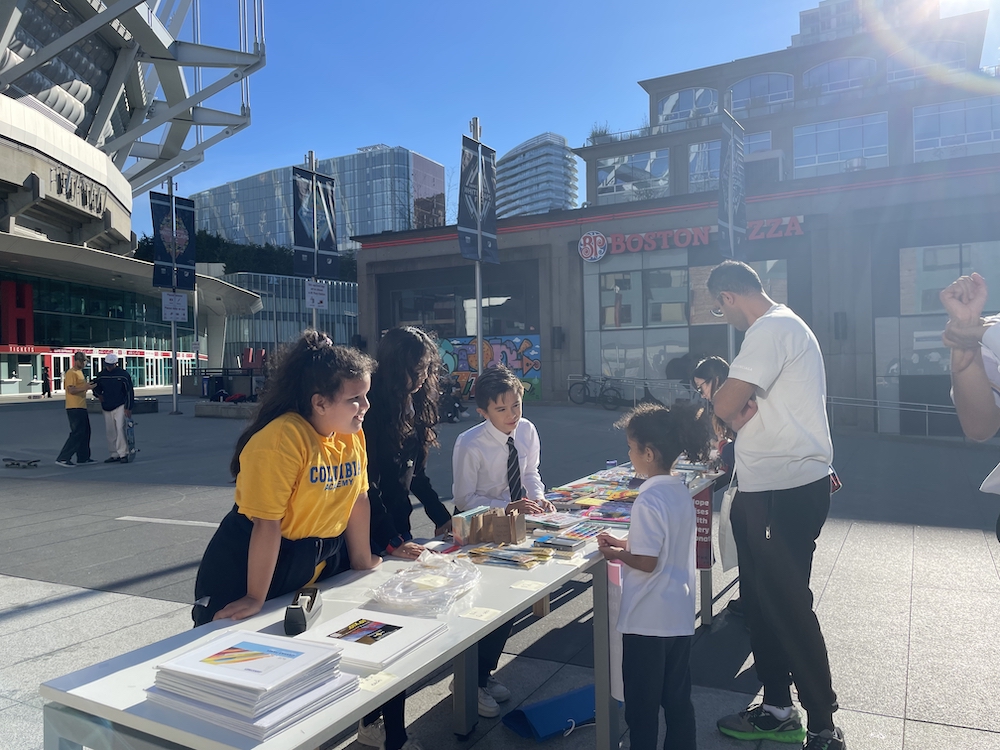
What Does Kindergarten Look Like at Columbia Academy?
Columbia Academy is a BC-certified K–7 school in downtown Vancouver. Our elementary program follows the B.C. Curriculum and includes English Language Arts, Math, Science, Social Studies, Physical and Health Education, French, Music, Art, ADST, and other learning opportunities.
Our Kindergarten program builds both academic foundations and daily learning habits.
Students develop regular reading and homework routines while also learning through a broad range of experiences.
Building Language Skills
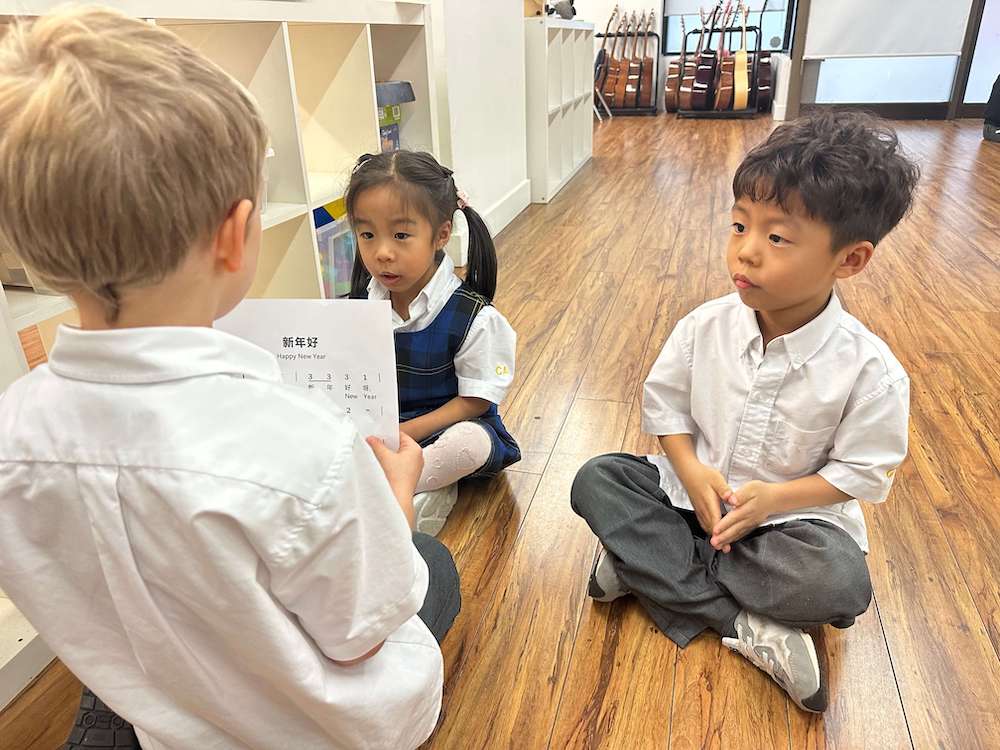
From Kindergarten, students are introduced to French and Chinese, giving children opportunities to hear, practise, and communicate in more than one language.
Building Music and Creativity
Kindergarten students are introduced to three musical instruments, helping them explore rhythm, listening, coordination, and creativity.
Building Strong Learning Habits
Daily reading and age-appropriate homework help children gradually build focus, responsibility, and independence.
The school begins this process at an age-appropriate level and increases expectations as children move through the grades. Columbia Academy’s K–7 homework structure includes daily reading from Kindergarten onward.
Building Focus and Well-Being
Meditation and mindfulness are built into the school day.
Students also take part in yoga and weekly outdoor learning, helping children practise movement, focus, awareness, and learning beyond the classroom.
What If My Child Is Not Ready in Every Area?
That is normal.
Kindergarten children arrive with different:
- Experiences
- Languages
- Personalities
- Strengths
- Interests
- Learning speeds
One child may read simple words but still need help separating from a parent.
Another may be very confident socially but know only a few letters.
Another may love numbers but need more support following routines.
School readiness is not one skill.
The better question is:
“Is my child ready to begin learning these skills with support?”
If you have a specific concern about speech, development, behaviour, learning, or health, it is helpful to discuss it with the school before your child starts.
This gives teachers more information about how to support the transition.
Parents who are still deciding whether Kindergarten is the right entry point can also read Should My Child Start Private School in Kindergarten?.
How Is Kindergarten Readiness Different From the Kindergarten Curriculum?
They are related, but they answer different questions.
Kindergarten readiness asks:
What skills can help my child make a successful start at school?
Kindergarten curriculum asks:
What will my child learn after Kindergarten begins?
Parents should not confuse curriculum outcomes with entry requirements.
For example, a skill that students develop during Kindergarten should not automatically become something parents believe their child must master before September.
If you want to see what children actually learn during the year, read our guide to the BC Kindergarten curriculum.
Frequently Asked Questions
Does my child need to know how to read before Kindergarten in BC?
No. Children do not need to be fluent readers before starting Kindergarten. Reading skills develop during school. Before Kindergarten, reading together, discussing stories, noticing letters, and developing an interest in books are helpful ways to prepare.
What math should my child know before Kindergarten?
A child does not need formal math skills before Kindergarten. Helpful experiences include counting everyday objects, comparing amounts, recognizing simple shapes, sorting objects, and noticing patterns.
What should a 5-year-old know before starting Kindergarten?
Useful skills include communicating basic needs, following simple directions, trying some self-care tasks, interacting with other children, listening to stories, exploring numbers, and managing short periods away from a caregiver. Children do not need to master every skill before school begins.
How can I prepare my child for Kindergarten in BC?
Read together, practise simple routines, encourage independence, play counting games, give your child opportunities to interact with other children, and talk positively about school. If possible, visit the school before the first day.
What age does a child start Kindergarten in BC?
Children can start Kindergarten in September of the year they turn five. Parents should confirm registration dates and requirements with their school district or independent school.
What if my child cannot write their name before Kindergarten?
That is not a reason to panic. Children enter Kindergarten with different writing abilities. Drawing, colouring, puzzles, modelling clay, and other fine-motor activities can help prepare the hands for writing.
Is Kindergarten in BC play-based?
Yes. B.C. describes full-day Kindergarten as a play-based program designed to support academic, social, physical, emotional, language, and cognitive development.
Final Answer: What Should a Child Know Before Kindergarten?
For kindergarten readiness BC, parents should focus less on whether a child can already read or complete math worksheets and more on whether they are developing the skills needed to participate in school.
A child will benefit from being able to:
- Communicate basic needs
- Follow simple directions
- Try everyday tasks independently
- Listen to a story
- Play and interact with others
- Explore letters, sounds, numbers, shapes, and patterns
- Ask an adult for help
- Manage small frustrations with support
- Feel curious about learning
They do not need to know everything before the first day.
Kindergarten is where much of this learning continues.
At Columbia Academy, our small K–7 environment helps teachers get to know young learners as they build academic skills, independence, confidence, and positive learning habits.
Families considering a private Kindergarten in Vancouver can explore our K–7 private elementary school program to learn more about Kindergarten, curriculum, languages, music, outdoor learning, and student life.
Because class sizes are intentionally small, families who are interested in Columbia Academy should learn about the program and apply early rather than waiting until just before the school year begins.