Student independence in elementary school develops step by step. Children do not become independent simply because they get older—they need chances to make choices, manage responsibilities, solve problems, ask for help, and learn from mistakes.
At Columbia Academy, independence grows gradually from Kindergarten through Grade 7. Younger students begin with simple routines, while older students take greater responsibility for their learning, homework, organization, communication, and preparation for high school.
What Does Independence Mean in Elementary School?
Independence does not mean that children have to do everything alone.
It means they are gradually learning to:
- Take care of their belongings
- Follow classroom routines
- Start tasks without constant reminders
- Ask for help when they need it
- Complete work carefully
- Manage homework
- Solve simple problems
- Make responsible choices
- Set goals
- Reflect on mistakes
- Work with others
- Take responsibility for their actions
A Kindergarten student and a Grade 7 student will show independence in very different ways.
That is expected.
The goal is steady growth, not instant independence.
B.C.’s Core Competencies also describe this type of progression. As children grow, they move from highly supported situations toward greater independence in more complex situations.
How Does Independence Change from Kindergarten to Grade 7?
At Columbia Academy, expectations grow with the child.
| Grade Stage | Examples of Growing Independence |
|---|---|
| Kindergarten–Grade 1 | Following routines, managing belongings, asking for help |
| Grades 2–3 | Completing tasks, reading daily, organizing basic schoolwork |
| Grades 4–5 | Managing more homework, checking work, solving problems independently |
| Grades 6–7 | Planning work, meeting deadlines, communicating needs, preparing for high school |
This progression matters.
Giving a five-year-old the same responsibility as a Grade 7 student would not make sense.
Instead, children need age-appropriate opportunities to practise independence.
Kindergarten–Grade 1: Learning Simple Routines
For young children, independence often begins with very small actions.
A Kindergarten student may be learning how to:
- Put away a backpack
- Bring the right materials to a table
- Follow a morning routine
- Clean up after an activity
- Listen to simple instructions
- Wait for a turn
- Ask a teacher for help
- Finish a short task
- Look after personal belongings
These may seem like small skills.
But they create the foundation for later academic independence.
Learning to Try Before Giving Up
A teacher does not need to immediately solve every problem for a child.
Imagine that a student cannot open a pencil case.
Instead of opening it immediately, the teacher might say:
“Try again. What else could you do?”
The student may try another way.
If that still does not work, they can ask for help.
That simple experience teaches an important lesson:
I can try to solve a problem, and I can ask for help when I need it.
That is independence.
Building Independence Through Daily Reading
Regular reading is one of the ways Columbia Academy begins building learning habits early.
From Kindergarten onward, students develop a daily reading routine. As children grow, they are expected to take more responsibility for completing their reading and schoolwork.
For a younger student, this may mean sitting with a parent and reading together.
Later, the student may begin to:
- Choose a book
- Remember to read without being reminded
- Keep track of reading
- Talk about what they have read
- Ask questions about unfamiliar words
- Complete reading more independently
The academic skill is reading.
But the life skill underneath it is responsibility.
Grades 2–3: Taking More Responsibility for Learning
By Grades 2 and 3, students can begin doing more for themselves.
They may be expected to:
- Follow multi-step directions
- Complete work within a set time
- Bring homework back to school
- Check that work is complete
- Keep their desk and materials organized
- Read independently
- Ask questions when something is unclear
At Columbia Academy, homework expectations increase gradually as students move through the grades. Students in Grades 2–3 have more homework responsibility than students in Kindergarten–Grade 1, while daily reading remains part of the routine.
This gradual increase helps children practise managing their own work.
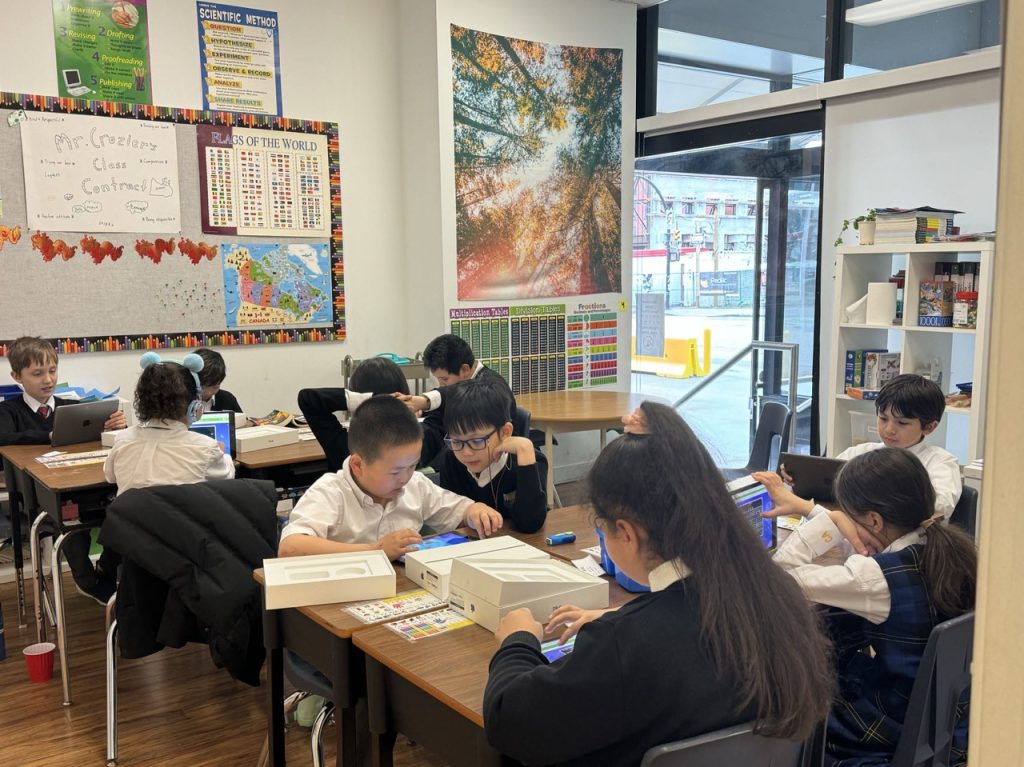
Teachers Should Support Independence, Not Do Everything for Students
Helping a child and doing the work for a child are not the same thing.
Consider a student who says:
“I don’t know how to do this.”
A teacher could simply give the answer.
But that does not build independence.
Instead, the teacher might ask:
“What part do you understand?”
“What did we do yesterday that could help?”
“Where could you look for the information?”
“What could you try first?”
Now the student has to think.
The teacher is still supporting the child, but the child remains responsible for the learning.
This approach connects well with B.C.’s curriculum, which places Thinking, Communication, and Personal and Social competencies alongside academic knowledge.
Why Small Classes Can Help Build Independence
It may sound surprising, but giving students more individual attention does not have to make them more dependent on teachers.
It can do the opposite.
At Columbia Academy, K–7 classes have 15 students or fewer.
In a smaller class, a teacher has more opportunities to understand when a child truly needs help and when the child may simply need encouragement to try independently.
For example, a teacher may know that one student needs extra explanation in math but is very capable of organizing their own materials.
Another child may understand the academic work easily but need reminders to slow down and check it.
Independence becomes more personal because teachers can better understand the student’s current level of development.
Parents interested in this learning environment can read about the benefits of small class sizes in elementary school.
Grades 4–5: Learning to Manage Work
By Grades 4 and 5, independence becomes more academic.
Students have more subjects, longer assignments, and greater responsibility.
They begin learning to:
- Manage homework
- Follow deadlines
- Prepare materials
- Read instructions carefully
- Review work before submitting it
- Break a larger task into smaller steps
- Work independently for longer periods
- Take responsibility when something is incomplete
Columbia Academy increases homework expectations as students progress through K–7. Grades 4–5 have a longer daily homework expectation than the primary grades, along with continued daily reading.
The purpose is not only to complete more work.
Students are learning:
“This is my responsibility. How will I manage it?”
Letting Students Make Mistakes
Independence also requires room to make mistakes.
If adults fix every forgotten book, unfinished task, or small problem, children may not learn how to manage those situations themselves.
A forgotten assignment can become a learning opportunity.
The conversation might be:
“What happened?”
“What could you do differently tomorrow?”
“What will help you remember?”
Maybe the student decides to:
- Use a checklist
- Pack their bag before leaving class
- Write down homework
- Put materials in the same place each day
The solution is more powerful when the child takes part in creating it.
Building Responsibility Through Homework
Homework can support independence when the expectations are clear and age appropriate.
At Columbia Academy, homework grows gradually across the elementary years:
- K–1: 30 minutes of homework plus daily reading
- Grades 2–3: 45 minutes of homework plus daily reading
- Grades 4–5: 1 hour of homework plus daily reading
- Grades 6–7: 1.5 hours of homework plus daily reading
This gradual progression helps students develop stronger study routines as they approach high school.
Parents can learn more about the role of practice and routines in our article about homework in elementary school.
Independence Is Also Knowing When to Ask for Help
An independent student is not a student who never asks for help.
In fact, asking for help is an important skill.
A student might say:
“I understand the first question, but I don’t understand the second step.”
That is very different from:
“I can’t do it.”
The first student has thought about the problem and can explain where support is needed.
B.C.’s Communication competency includes learning to express needs, communicate with others, and seek help when needed.
As students grow older, teachers can encourage them to speak for themselves rather than always relying on a parent to communicate on their behalf.
Learning to Manage Emotions and Focus
Independence is not only about schoolwork.
Children also need to learn how to manage themselves.
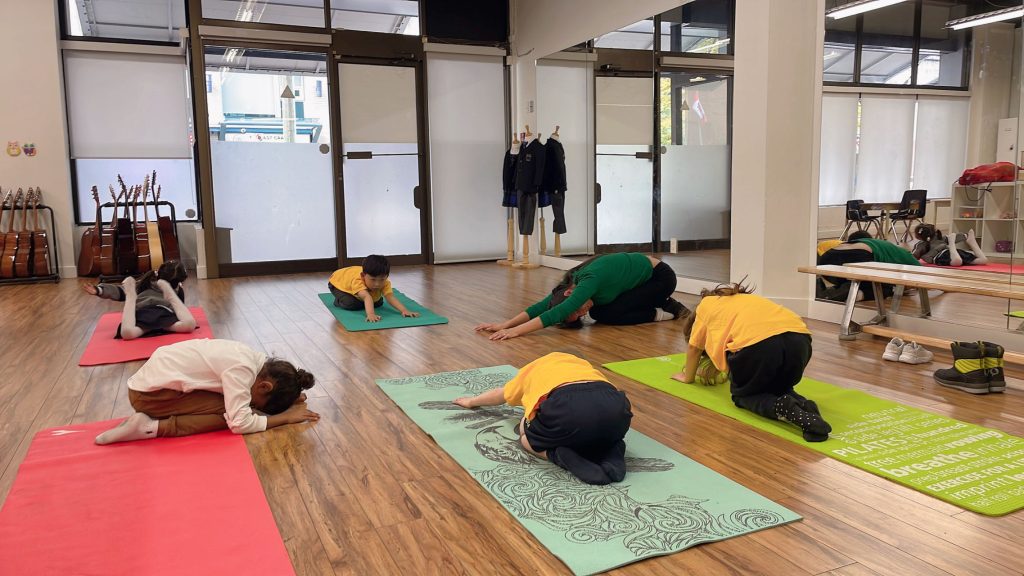
At Columbia Academy, meditation is built into the elementary school day, giving students regular moments to pause, reflect, and refocus.
Students also take part in mindfulness activities such as yoga.
These routines can help students practise:
- Recognizing emotions
- Calming their bodies
- Refocusing after distraction
- Pausing before reacting
- Managing frustration
- Returning attention to learning
A teacher may still help a young student calm down.
Over time, however, students can begin learning strategies they can use themselves.
That is another form of independence.
Independence Can Grow Through Languages, Music, and Outdoor Learning
Children do not develop independence only through math and reading.
Different learning experiences give them different chances to take responsibility.
At Columbia Academy, K–7 students study a broad range of subjects, including English Language Arts, Math, Science, Social Studies, Physical and Health Education, French, Music, Art, ADST, and language-learning opportunities.
Students also have opportunities for Chinese language learning, music beginning with multiple instruments, and weekly outdoor learning.
In Music
A child may need to:
- Remember an instrument
- Follow a sequence
- Practise
- Listen carefully
- Keep trying after a mistake
In Language Learning
Students practise:
- Speaking even when they are unsure
- Listening carefully
- Remembering vocabulary
- Communicating with others
In Outdoor Learning
Students may practise:
- Following instructions in a different setting
- Looking after belongings
- Working with classmates
- Making observations
- Taking responsibility for their behaviour outside the classroom
These experiences help independence become part of everyday school life.
Grades 6–7: Preparing for Greater Responsibility
Grades 6 and 7 are an important transition.
High school requires students to manage more:
- Teachers
- Subjects
- Assignments
- Deadlines
- Assessments
- Personal choices
Students who have always depended on an adult to organize everything may find this transition difficult.
That is why Grades 6–7 should include opportunities to practise greater responsibility before Grade 8.
At Columbia Academy, older elementary students are expected to take increasing responsibility for homework, school routines, behaviour, and communication.
The goal is not for parents and teachers to disappear.
The goal is for adults to gradually move from:
“I will manage this for you.”
toward:
“I am here if you need guidance, but you can manage more of this yourself.”
How Grade 7 Prepares Students for Grade 8
By the end of Grade 7, students benefit from being able to:
- Keep track of assignments
- Meet deadlines
- Organize materials
- Study independently
- Ask teachers questions
- Accept feedback
- Work in groups
- Manage frustration
- Solve everyday problems
- Take responsibility for mistakes
These skills can make the move into secondary school smoother.
Columbia Academy’s K–12 structure also allows families to see elementary education as the foundation for the next stage of learning.
You can read more about this transition in our guide to the Grade 7 to Grade 8 transition.
What Role Do Parents Play in Building Independence?
Parents are very important.
But supporting independence sometimes means doing less, not more.
For example, instead of saying:
“Give me your backpack. I’ll pack everything.”
try:
“Check what you need for tomorrow. I’ll help if you’re unsure.”
Instead of:
“You forgot your homework. I’ll bring it to school.”
you might ask:
“What can you do tonight so you remember it tomorrow?”
The goal is not to let children fail.
The goal is to give them small, safe opportunities to solve problems.
Parents Can Use Three Steps
1. Let the child try.
Give them enough time to attempt the task.
2. Give a small clue if needed.
Do not immediately take over.
3. Reflect afterward.
Ask:
“What worked?”
“What will you do next time?”
This turns everyday situations into learning opportunities.
How Does Columbia Academy Support Student Independence?
Columbia Academy Elementary is a BC-certified K–7 school where BC-certified teachers use the provincial curriculum. The program is designed not only around academics, but also around qualities such as responsibility, resilience, communication, and confidence.
In practice, students develop independence through:
- Small classes
- Daily routines
- Regular reading
- Age-appropriate homework
- Classroom responsibilities
- Independent and group work
- Problem solving
- Language learning
- Music
- Outdoor learning
- Meditation and mindfulness
- Communication with teachers
- Growing expectations from Kindergarten through Grade 7
The key is progression.
A Kindergarten child receives more guidance.
A Grade 7 student receives more responsibility.
Students are supported at each stage while being encouraged to take the next step themselves.
Frequently Asked Questions
How can elementary schools teach children to be independent?
Schools can build independence through clear routines, classroom responsibilities, problem solving, homework, goal setting, organization, and opportunities for students to make appropriate choices. Teachers can provide support without immediately doing tasks for students.
At what age should children become independent at school?
There is no single age. Independence begins with simple skills in the early years and grows over time. A Kindergarten student may independently put away their backpack, while a Grade 7 student may independently manage several assignments and deadlines.
Does homework help children become more independent?
Homework can help students practise responsibility, organization, and time management when expectations are appropriate for their age. Children should gradually take more responsibility for remembering and completing their own work.
How can parents encourage independence without giving too little support?
Let the child try first. If they become stuck, offer a clue or question rather than immediately completing the task. Support can gradually decrease as the child becomes more capable.
Why is independence important before Grade 8?
Secondary school often requires students to manage more subjects, assignments, teachers, and deadlines. Building organization, self-advocacy, problem-solving, and study habits in elementary school can help make that transition easier.
How does Columbia Academy build student independence?
Columbia Academy builds independence gradually from Kindergarten through Grade 7 through small-class learning, daily routines, reading and homework habits, classroom responsibility, mindfulness, academic learning, languages, music, outdoor activities, and increasing expectations as students grow.
Final Answer: How Does Columbia Academy Build Independence from K–7?
Student independence in elementary school is not created in one lesson. It develops through hundreds of small experiences.
In Kindergarten, independence may mean putting away a backpack or asking a teacher for help.
By Grade 3, it may mean remembering homework and completing a task without constant reminders.
By Grade 5, it may mean organizing work and checking it independently.
By Grade 7, it may mean managing deadlines, communicating with teachers, solving problems, and preparing for the greater responsibility of high school.
At Columbia Academy, students are given increasing responsibility as they move through the K–7 program while teachers continue to provide guidance when it is needed.
The goal is not simply to raise students who can complete schoolwork independently.
It is to help children become confident learners who can think, communicate, take responsibility, and know when to ask for help.
Families looking for a private elementary school in Vancouver can explore Columbia Academy’s K–7 program to learn more about academics, languages, music, student life, and the learning environment.