Yes — most private high schools in Vancouver offer some form of ESL support, but the depth varies widely from school to school. Some run a full ESL program; others offer only light help. The real question for families is not whether a school offers ESL support, but how it works day to day. At Columbia Academy, a private high school in downtown Vancouver with students from more than 20 countries, ESL support is built into the school day.
This post explains what ESL support really means, how it differs between schools, and exactly what to ask before you choose.

What Does ESL Support Actually Mean?
ESL stands for English as a Second Language. But “ESL support” is not one single thing — it covers a wide range of help:
- Full ESL classes — separate lessons that teach English directly.
- In-class support — the subject teacher adapts lessons so English learners can keep up in math, science, and other courses.
- Language help built into the school day — teachers check for understanding, slow down, and support students as they learn.
- Light or informal help — a teacher who is simply willing to explain again.
Two schools can both say “we offer ESL support” and mean very different things. That is why the wording on a website tells you little — you have to ask how it works.
Why ESL Support Matters More Than Families Think
For most international students, English is the biggest hurdle in the first year. Strong ESL support decides whether a student keeps up — or quietly falls behind.
Here is the key point: a student can be brilliant at math and still fail a math test if they cannot read the question. Good ESL support protects a student’s whole education, not just their English. It lets them take demanding academic courses while their English grows, instead of waiting on the sidelines.
This is closely tied to how international students adjust to high school in Vancouver — language confidence is often the single biggest factor in how quickly a student settles in.

How ESL Support Works at Columbia Academy
At Columbia Academy, support for English learners is not a separate, bolt-on class. It is woven into the daily rhythm of school — which means students improve their English while doing their real coursework, not on the sidelines.
Four things make it work:
- Daily before- and after-class help. Teachers are available every day, before and after class, so a student who did not follow something gets help the same day — not a week later. For an English learner, that quick, in-person clarification is often the difference between keeping up and falling behind.
- A strong daily focus on English reading and writing. English reading and writing are core priorities at the school. Every student does at least one hour of English work each day, which steadily builds the academic English needed for essays, presentations, and understanding textbooks. This is the kind of English that universities actually look for — and daily practice is how it grows.
- Small class sizes. In a class of 30, an English learner can hide all year. In a small class, teachers notice confusion the same week — not at report cards. Students also get far more chances to speak English out loud.
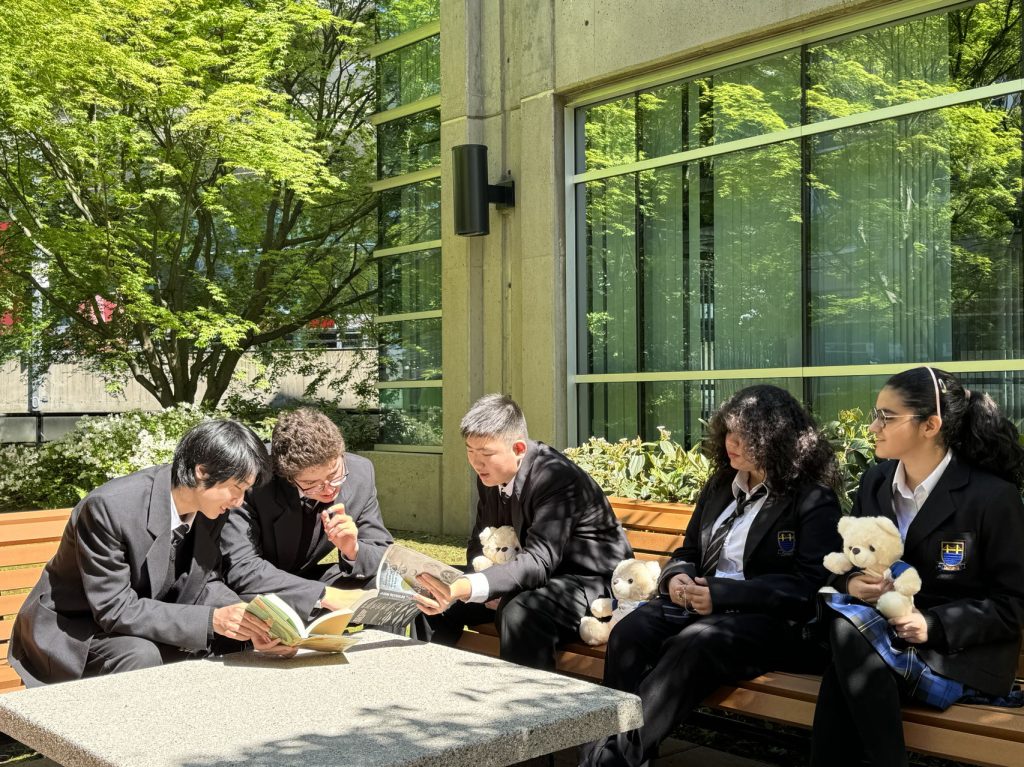
- Peer tutoring and a supportive community. Students help each other through a Peer Tutoring Club and after-school tutoring, and because classmates come from more than 20 countries, no one is “the only English learner” — many remember exactly what learning in a new language feels like. There is also a meditation club and counselling support for students managing the stress of a big transition.
Columbia Academy supports English learners through this daily, built-in help and strong English focus — not through a separate ESL class or streamed ESL program. For a motivated student who wants to learn alongside English-speaking peers rather than apart from them, this immersion-with-support approach works well. For a student who arrives with very little English and needs a formal, separate ESL track, it is worth discussing fit with our admissions team first — an honest conversation now saves disappointment later.
The BC Ministry of Education recognizes that English language learners need extra support, and its English Language Learning policy sets out how schools identify and support these students across the province.
Questions to Ask a School About ESL Support
Because “ESL support” means so many different things, use these questions on every school you visit:
| Ask this | A strong answer sounds like |
| How is ESL support delivered? | Built into the school day, not extra-cost or after-hours only |
| Do teachers have ESL training? | Yes — staff know how to teach English learners |
| What English level do we need to start? | A clear answer, with a plan for lower levels |
| How do you track English progress? | Regular check-ins, not “we’ll see how it goes” |
| How does ESL fit with academic courses? | Students take real courses while improving English |
Vague answers are a warning sign. Specific answers signal a school that has done this many times.
ESL Support and University Outcomes
ESL support is not the end goal — university is. Strong support is what lets international students reach it.
At Columbia Academy, the results speak for themselves: 100% university acceptance, with 90% of graduates accepted to QS Top 50 universities. Many of these students arrived still building their English. The school is also an AP-certified school and AP testing center, and ranks Top 5 in BC math contests — where international students often shine first, even while their English is still growing.
To be honest with families: strong ESL support makes the journey manageable, but it does not remove the effort. The first year takes real work. Students who speak English daily, join clubs, and ask for help adjust far faster. Families choosing a school should also weigh the other things that matter in a Vancouver high school, with ESL support high on the list for international families.
FAQ: ESL Support at Vancouver Private High Schools
Do all private high schools in Vancouver offer ESL support?
Most offer some form of it, but the depth varies a lot. Some have full ESL programs; others offer only light help. Always ask exactly how ESL support works day to day.
What is the difference between ESL classes and ESL support?
ESL classes are separate lessons that teach English directly. ESL support is broader — it includes in-class help, adapted lessons, and language help built into the regular school day.
How much English do students need to start high school in Vancouver?
It varies by school. Schools with strong ESL support can accept students who are still building English, then help them improve while they study. Ask each school for its entry expectations.
How long does it take to no longer need ESL support?
It depends on the student’s starting level and effort. Many students gain classroom confidence within a year, though academic English can take longer. Daily practice speeds this up.
Does ESL support cost extra at private schools?
At some schools yes, at others it is included. This is an important question to ask, since costs add up. Confirm whether ESL support is part of tuition or a separate fee.
Final Answer: Do Private High Schools in Vancouver Offer ESL Support?
Yes — most private high schools in Vancouver offer ESL support, but the quality and depth vary widely, so the real task is to ask how it works. The strongest support is built into the school day, backed by small classes and teachers who know how to teach English learners — so students keep up in every subject while their English grows.
At Columbia Academy, a private high school in downtown Vancouver, ESL support is part of daily learning, inside a community of students from 20+ countries. Our high school program for Grades 8–12 is built to help international students succeed from day one.
Seats are limited each year, and international families should apply early to allow time for the study permit process. Reach out to learn how our ESL support could help your child thrive.