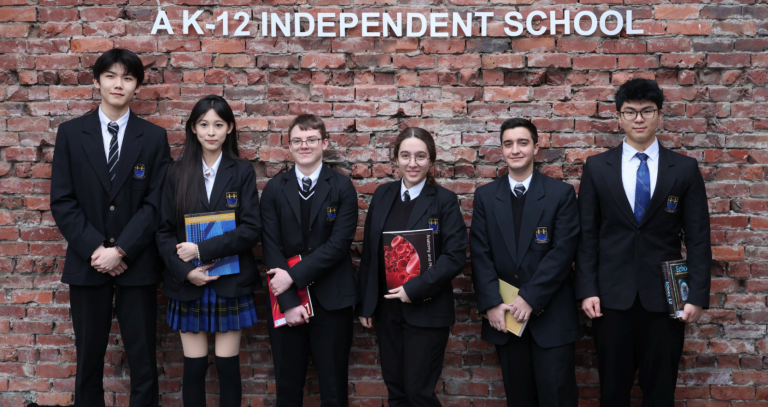
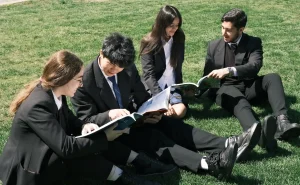
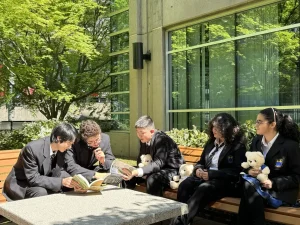
When choosing a Vancouver high school, parents should look for five things above all else: a strong university preparation record, small class sizes, an advanced academic program, a well-rounded co-curricular environment, and honest communication from the school. These are not abstract ideals — they are measurable, observable qualities that directly shape what your child’s next four years will look like and where they will go afterwards. At Columbia Academy, a private high school in downtown Vancouver, every one of these factors is built deliberately into the Grades 8–12 program at the Coal Harbour campus.
This guide walks you through each factor in plain terms — so you can evaluate any Vancouver high school, public or private, with confidence.
1. University Acceptance Rate — The Result That Matters Most
The most important outcome of high school is what happens next. If your child’s goal is university — and for most Vancouver families it is — then the school’s university acceptance record is the clearest signal of whether its program actually works.
Ask every school you consider:
- What percentage of graduates are accepted to university?
- What universities do your graduates attend?
- How many graduates go to nationally or internationally ranked institutions?
These are reasonable questions. Any school with a strong record will answer them directly.
At Columbia Academy, 100% of graduates are accepted to university. Of those, 90% gain entry to Top 50 universities worldwide according to the QS World University Rankings. This is not a range or an average across several years — it is the school’s consistent outcome.
For a detailed look at what drives these results, read our post on which private high schools in Vancouver have high university acceptance rates.

2. Class Size — Where Individual Attention Begins
Class size is one of the most practical factors in a high school — and one of the most overlooked by parents who focus only on a school’s reputation or ranking.
In a class of 28 students, a teenager can go weeks without being called on, without being noticed when they are struggling, and without developing a real relationship with their teacher. By Grade 11 and 12, when coursework is demanding and university applications require strong teacher references, that invisibility has real consequences.
In a small class, none of that happens.
Columbia Academy maintains small high school classes — which means teachers know every student well. They notice when a student is disengaged. They push students who are ready for more. They write university reference letters that reflect real knowledge of the student — not a vague summary based on a name in a grade book.
When visiting any Vancouver high school, walk into a classroom if you can. Count the students. That number tells you more than any brochure will.
3. Academic Program Depth — Beyond the BC Curriculum
Every BC high school — public and private — follows the BC Curriculum set by the provincial government. Every graduate earns the same BC Dogwood Diploma. So the curriculum alone does not differentiate one school from another.
What differentiates schools is what they offer beyond the provincial minimum.
At Columbia Academy, the senior school program is built on top of the BC curriculum — not just alongside it. Key additions include:
AP courses and testing centre status Columbia Academy is a certified AP school and official AP testing centre in Vancouver. AP — Advanced Placement — is a College Board program that allows students to take university-level courses and sit standardised exams in high school. Strong AP results can earn university credits before enrolment, strengthen applications to competitive programs, and demonstrate genuine academic readiness to admissions offices worldwide.
Having a testing centre on campus removes the logistical barrier that stops many students at other schools from sitting AP exams. Students do not need to travel to another location — they sit their exams in a familiar environment.
Top 5 in BC math contests Columbia Academy students consistently place in the top 5 in BC math contests. This reflects not just strong teaching but a culture of academic ambition that runs through the student body. For students considering engineering, science, economics, or business at university, provincial-level mathematics achievement is a meaningful differentiator.
For an honest assessment of how private and public high schools compare on academic depth, read our post on whether a private high school in Vancouver is worth it.

4. Co-Curricular Program — What Universities Actually Look For
Canadian universities — and especially UK, US, and Australian institutions — evaluate students on far more than their grades. They look for evidence of leadership, contribution, initiative, and genuine engagement outside the classroom.
A high school with a thin co-curricular program produces students with thin applications.
Ask any Vancouver high school you are considering:
- How many school events, competitions, and community activities run each year?
- Are students encouraged to take leadership roles in school life?
- Are there academic competitions beyond classroom assessment?
- Does the school help students build a record of involvement that strengthens university applications?
Columbia Academy runs more than 40 events per year — spanning academic competitions, cultural events, community service initiatives, and student-led activities. These are structured, intentional parts of the school year. They exist because Columbia Academy understands that the student a university admits is the whole person — not just the transcript.
5. Support for International Students — Especially in Vancouver
Vancouver is one of the most international cities in Canada. A significant proportion of high school students in the city — in both public and private schools — are international students, new Canadians, or students from multilingual households.
The right Vancouver high school should have genuine, developed systems for supporting these students — not just a mention of ESL services on a website.
Ask schools directly:
- What ESL support is available, and at what grades?
- Are there staff with specific experience supporting students new to Canada?
- How does the school help international students navigate university applications outside Canada — to the US, UK, or Australia?
- What does the international student community look like in practice?
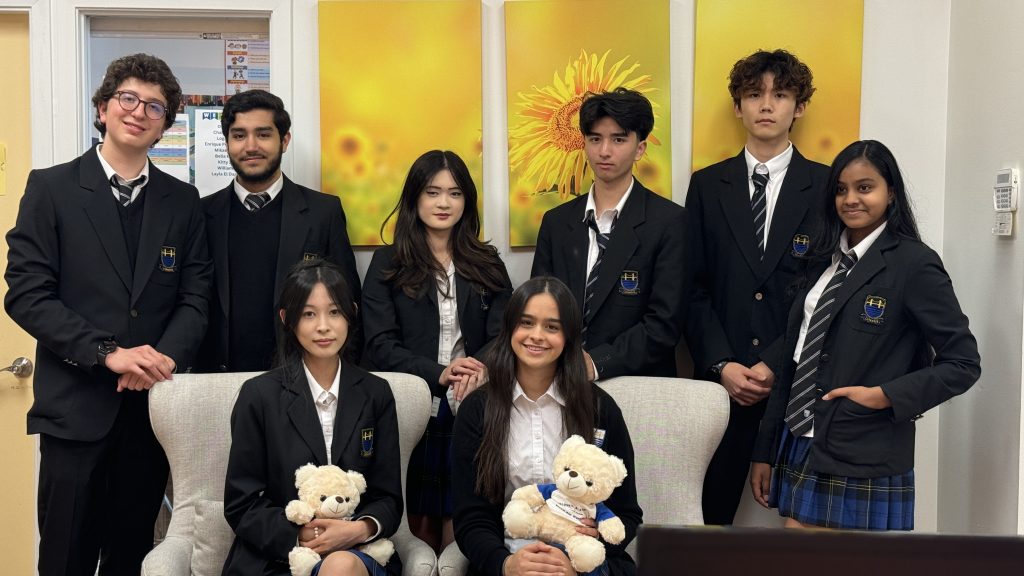
Columbia Academy’s student body includes young people from more than 20 countries. ESL support is available throughout the Grades 8–12 program. The school has established experience helping students navigate university applications to institutions across Canada and internationally — including guidance specific to the requirements of UK, US, and Australian admissions processes.
According to Immigration, Refugees and Citizenship Canada, international students studying in Canada at the secondary level require specific documentation and support structures. Columbia Academy is experienced in helping families navigate this process.
6. Honest Admissions Communication — A Trust Signal
This one is easy to overlook — but it matters.
A school that is straightforward about its admissions process, available seats, application deadlines, and costs is a school that treats families with respect. A school that gives vague answers, avoids questions about capacity, or uses pressure tactics during tours is showing you something about its culture.
When you visit any Vancouver high school, notice whether the admissions team:
- Answers your questions directly, including uncomfortable ones about costs and availability
- Tells you honestly when seats are limited — rather than implying unlimited space
- Gives you realistic timelines and expectations rather than just telling you what you want to hear
At Columbia Academy, seats in the Grades 8–12 program are limited each year. The school is honest about this. Families who visit, ask questions, and apply early have the best chance of securing a place. Families who wait often find themselves on a waitlist.
That kind of directness is a feature, not a flaw.
A Parent’s Checklist — What to Look for in a Vancouver High School
Use this table when comparing schools:
| What to look for | What to ask | What Columbia Academy offers |
|---|---|---|
| University outcomes | What % get into Top 50 universities? | 100% acceptance, 90% Top 50 QS |
| Class size | How many students per class? | Small classes, individual attention |
| Advanced academics | Are AP courses offered on campus? | Certified AP school + testing centre |
| Academic achievement | Any contest placements or awards? | Top 5 in BC math contests |
| Co-curricular program | How many events per year? | 40+ events annually |
| International support | What ESL and university guidance exists? | Students from 20+ countries, ESL available |
| Admissions honesty | Are they direct about seats and costs? | Yes — limited seats, early applications encouraged |
What the BC Ministry of Education Says About Independent Schools
Independent schools in BC are held to provincial standards by the BC Ministry of Education and Child Care. They are regularly inspected, follow the BC curriculum, and produce graduates who earn the same BC Dogwood Diploma as public school students.
What independent schools can do — and many do — is go significantly beyond those minimum standards in ways that public schools, bound by union agreements, budget constraints, and class size regulations, often cannot.
Columbia Academy is a fully certified BC independent school. Its students meet all provincial requirements — and then some.
Frequently Asked Questions
What questions should parents ask when choosing a high school in Vancouver? Ask about the university acceptance rate, class sizes, whether AP courses are available on campus, what co-curricular programs run each year, and what support exists for ESL or international students. Also ask directly about available seats and application deadlines — the answers reveal a lot about how the school operates.
How do I compare private and public high schools in Vancouver? Start with outcomes: what percentage of graduates go to university, and to which universities? Then compare class sizes, program depth beyond the BC curriculum, and the co-curricular environment. Both public and private schools follow the BC curriculum — the difference is in what they offer beyond it.
What makes a good high school in Vancouver BC? Strong university preparation, small or managed class sizes, an advanced academic program such as AP, a rich co-curricular life, genuine support for international and ESL students, and honest communication from the school’s leadership and admissions team.
How does class size affect high school learning in Vancouver? Smaller classes allow teachers to give more individual feedback, identify learning gaps earlier, and build the kind of staff-student relationships that produce strong university reference letters. In large classes, students — especially quieter or more independent ones — can go unnoticed for months.
What high school gives the best university preparation in Vancouver? The best university preparation comes from a school that combines rigorous academics, small classes, AP course access, structured co-curricular opportunities, and a proven track record of graduate outcomes. Columbia Academy’s Grades 8–12 program at 602 West Hastings Street produces 100% university acceptance with 90% of graduates entering Top 50 QS universities.
Final Answer — What to Look for in a Vancouver High School
When evaluating what to look for in a Vancouver high school, five things stand above the rest: a proven university acceptance record, small class sizes that ensure individual attention, an academic program that goes beyond the BC curriculum, a rich co-curricular environment that builds the whole student, and honest communication from the school throughout the admissions process.
Columbia Academy’s Grades 8–12 program at the Coal Harbour campus in downtown Vancouver delivers on all five. Every year, 100% of graduates are accepted to university — with 90% entering Top 50 institutions worldwide. Seats are limited. If you are considering Columbia Academy for your child’s high school years, the right time to reach out is now.
To learn more about the full senior school program, visit the Columbia Academy Senior School 8–12 overview.
Columbia Academy is a BC Ministry of Education–certified private K–12 school. The Grades 8–12 campus is at 602 West Hastings Street, Coal Harbour, Vancouver BC. The K–7 campus is at 792 Beatty Street, Yaletown, Vancouver BC.