This international student guide to high school in Vancouver walks through the process in order: choose a certified school, apply and get a letter of acceptance, arrange custodianship, apply for a study permit, then plan credits and arrival. Most families should start 6 to 12 months before the intended start date, because permits and paperwork take time.
Columbia Academy is a private K-12 school in downtown Vancouver that welcomes students from more than 20 countries. This guide lays out the practical steps — the “what to do and when” — so families can plan the move with confidence.
The 6 Steps, in Order
Here is the whole journey at a glance. Each step is explained below.
| Step | What Happens | Rough Timing |
|---|---|---|
| 1. Choose a certified school | Confirm the school is BC-certified; apply | 10–12 months before |
| 2. Get the letter of acceptance | School confirms a seat | After applying |
| 3. Arrange custodianship | Required for students under 19 | Before permit application |
| 4. Apply for a study permit | Government of Canada issues it | 8–16 weeks, varies |
| 5. Plan credits & courses | School maps prior credits to BC | Before or on arrival |
| 6. Arrive & settle in | Housing, arrival, first weeks | 2–4 weeks before start |
Timing varies by country and season. Applying early is the single best thing a family can do.
Step 1: Choose a BC-Certified School
Start by making sure the school is real and recognized. In British Columbia, private schools must be certified by the BC Ministry of Education to issue the Dogwood Diploma — the graduation certificate universities recognize.
Columbia Academy is a certified independent school in downtown Vancouver. Certification matters most for international families, because it is hard to verify a school from overseas. Once you have a shortlist, the next question is fit — our companion post on choosing the best private high school for international students covers what to compare.
Step 2: Apply and Get a Letter of Acceptance
You cannot apply for a study permit without a letter of acceptance from a certified school. So this comes early.
At Columbia Academy, seats are limited on purpose — classes stay small so teachers know every student. That means popular start points fill quickly, and early applications have the most options. Our admissions guide explains the requirements and timeline step by step.
Step 3: Arrange Custodianship
This step surprises many families, so plan for it early.
If a student is under 19 (the age of majority in BC) and a parent will not be living with them in Canada, the student needs a custodian — a responsible adult in Canada who can act on the parent’s behalf. The Government of Canada explains the rules for minor children studying in Canada, including the custodianship declaration.
Step 4: Apply for the Study Permit
Most international students studying high school in Canada for longer than six months need a study permit. You apply after you have the letter of acceptance and custodianship in place.
A few things families should know:
- Processing times vary a lot by country and season — from a few weeks to several months.
- You may also need a Provincial Attestation Letter (PAL) as part of the application. Requirements change, so always check the current Government of Canada guidance before applying.
- Apply as early as your acceptance allows. A delayed permit is the most common reason a start date slips.
Because rules change, treat the official Government of Canada study permit pages as the source of truth, and use this guide for the order of steps.
Step 5: Plan Credits and Courses
International students often arrive with credits that do not map neatly to the BC system. A good school sorts this out before enrolment.
British Columbia has a specific policy for this. The International Student Graduation Credit policy recognizes that international students may begin after the start of Grade 10 and still work toward the Dogwood Diploma, with certain core courses that must be completed in BC. It also affects students whose prior schooling was not in English or French.
Two Columbia Academy features help at this stage:
- ESL support is built into the school day, so students still building English can take demanding academic courses instead of waiting.
- The three-term system — three course blocks a year instead of two — gives extra room to close credit gaps. This is also how some students join a private high school mid-year rather than waiting for September.

Step 6: Arrive and Settle In
The final step is the move itself: housing, arrival, and the first weeks of school.
For housing, Columbia Academy offers a homestay program — students live with a vetted Canadian host family who provides a furnished room and three meals a day, with a Homestay Coordinator on hand to help. Our homestay guide explains how placement works, what it costs, and an important reminder: homestay and custodianship are separate — families arrange the custodian themselves as part of the study permit process.
Columbia Academy’s Coal Harbour Campus at 602 West Hastings Street sits in central downtown Vancouver, steps from SkyTrain and bus lines — so daily travel is simple from the first week. Settling in is its own journey, and we cover the first months in detail in our guide to how international students adjust to high school in Vancouver.
What Makes the Move Worth It
The paperwork is the means, not the goal. Here is what international students work toward at Columbia Academy:
- 100% university acceptance among graduates
- 90% accepted to QS Top 50 universities
- AP-certified school and AP testing center — take AP courses and write exams on campus
- Top 5 in BC math contests — where international students often shine first, even while their English grows
- Students from 20+ countries, so no one adjusts alone
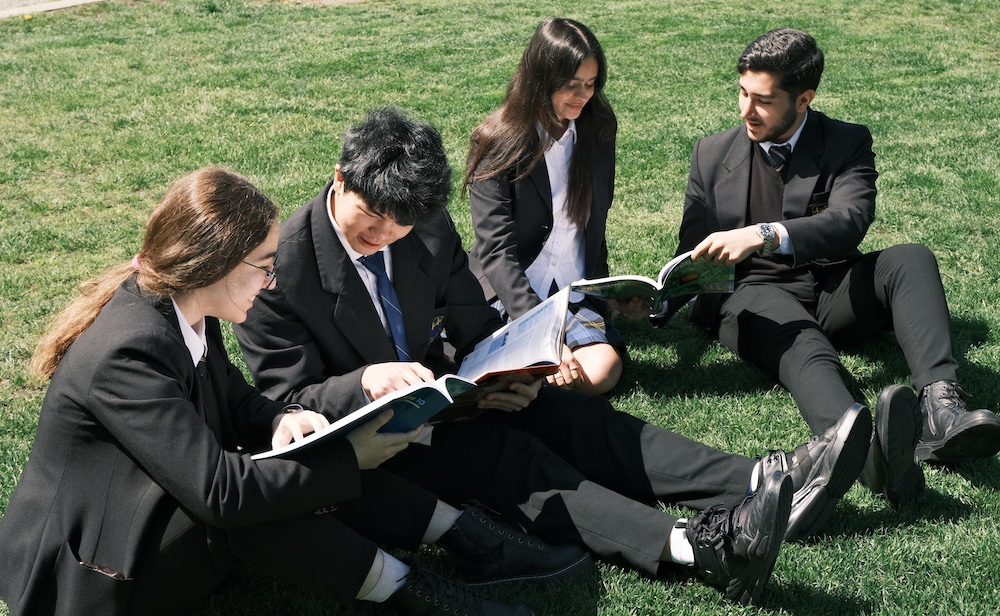
To be honest with families: the process takes real effort and time, and the first months in a new country are a genuine adjustment. But with early planning and the right support, thousands of international students make this move to Vancouver every year — and thrive.
FAQ: International Students at Vancouver High Schools
What do international students need to attend high school in Vancouver?
Most need four things: a letter of acceptance from a BC-certified school, a custodian if under 19 and not living with a parent, a study permit for programs over six months, and a credit plan mapping prior schooling to BC requirements.
How early should international students apply?
Aim for 6 to 12 months before the start date. Study permits and custodianship take time, and small schools fill limited seats early.
Do international high school students in BC need a custodian?
Yes, generally, if they are under 19 and a parent will not be living with them in Canada. A custodian is a responsible adult in Canada, arranged through a custodianship declaration.
Can international students still earn a BC Dogwood Diploma if they start after Grade 10?
Yes. BC’s International Student Graduation Credit policy allows students to begin after the start of Grade 10 and still work toward the Dogwood, with certain core courses completed in BC.
How long does a study permit take?
It varies widely by country and time of year — from a few weeks to several months. Always check current Government of Canada processing times and apply as early as possible.
Final Answer: International Student Guide to High School in Vancouver
This international student guide to high school in Vancouver comes down to six steps in order: choose a BC-certified school, get a letter of acceptance, arrange custodianship, apply for a study permit, plan your credits, and prepare your arrival. Start 6 to 12 months ahead, and the whole process is manageable.
Columbia Academy’s high school program for Grades 8–12 in downtown Vancouver supports international families through every step — with built-in ESL support, credit planning, and a three-term calendar that helps students catch up and move ahead.
Seats are limited and permits take time, so early applications matter most for international families. Reach out to our admissions team to start your plan — we’re glad to help you map the move from your country to our campus.