Overview: Private School vs Public School in Canada
Choosing the right educational path is one of the most important decisions a family can make. In Canada, parents often weigh the pros and cons of private schools vs public schools to determine which option best suits their child’s academic, emotional, and social needs.
Both systems have their strengths. The ideal choice depends on the student’s goals, family values, learning style, and budget.
Key Differences Between Private and Public Schools
| Feature | Public School | Private School |
|---|---|---|
| Tuition | Free for citizens/permanent residents | Paid annually, typically $8,000–$30,000 CAD |
| Class Size | Larger (20–30+ students) | Smaller (often 10–20 students per class) |
| Curriculum | Standard provincial curriculum | Provincial curriculum, often with enhancements (AP, IB) |
| Facilities | Varies by district funding | Often modern and well-resourced |
| ESL Support | Limited and inconsistent | Structured, multi-tiered programs |
| University Counseling | General guidance | Personalized support, application coaching |
| Extracurriculars | Wide range, but may depend on school resources | Rich programming tailored to individual interests |
| Flexibility | Fewer intake periods, rigid structure | More adaptable, multiple start dates (at some schools) |
Advantages of Public Schools
-
Free access to education for Canadian citizens and permanent residents
-
Diverse student population reflective of local communities
-
Often offers French Immersion or special needs support
-
Good fit for families prioritizing affordability and integration with neighborhood life
Advantages of Private Schools
-
Small class sizes mean more individualized attention
-
More academic rigor through AP, IB, or enrichment programs
-
Better access to personalized university prep and scholarship coaching
-
Often greater emphasis on character development, leadership, and extracurriculars
-
Families have more choice in selecting a school aligned with specific educational values or philosophies
Where Columbia Academy Fits In
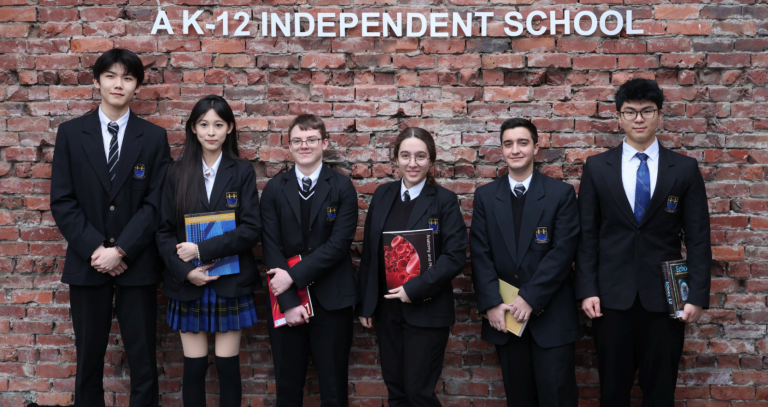
Columbia Academy is a private high school in Vancouver offering Grades 8 through 12. It’s a strong example of how private schools deliver personalized learning and prepare students for academic excellence.
Key Features:
-
BC Ministry–certified curriculum, awarding the Dogwood Diploma
-
Advanced Placement (AP) courses in math, science, and humanities
-
Class sizes of 15 students or fewer, ensuring close student-teacher engagement
-
Tiered ESL support for all students
-
University counseling services, from essay coaching to global application strategy
-
Flexible intake dates: January, April, July, and September
-
Downtown Vancouver location for easy access and cultural exposure
Columbia Academy is ideal for families seeking strong academic structure, global university preparation, and ongoing personal support through high school.
Cost Consideration
Public schools are tuition-free, which makes them accessible to all. However, for international students, public schools often charge fees comparable to private schools.
Private schools, while fee-based, often include enhanced academic resources, holistic growth support, university counseling, and more flexible programming—justifying the investment for many families.
Academic Outcomes
Studies consistently show that private school students are more likely to attend and graduate from university, especially when enrolled in schools that provide structured academic support.
Columbia Academy graduates, for example, are regularly accepted into top Canadian universities such as:
-
University of British Columbia (UBC)
-
University of Toronto
-
McGill University
-
University of Waterloo
Many also receive offers from institutions in the U.S., U.K., and Australia.
Frequently Asked Questions
1. Are private schools better than public schools?
Not necessarily—they’re different. Private schools often offer smaller classes and more individualized attention, while public schools offer free education and community integration. The right choice depends on the student’s needs.
2. Can international students attend public schools in Canada?
Yes, but they usually must pay tuition and may face limited ESL or counseling support compared to private schools.
3. How much does private school cost in Canada?
Annual tuition ranges from $8,000 to $30,000 CAD depending on the school and grade level.
4. What’s the main advantage of private schools like Columbia Academy?
Tailored support for high school success and university admission—especially for international and academically focused students.
5. Do private schools follow the same curriculum?
Yes. Accredited private schools like Columbia Academy follow the provincial curriculum and offer recognized diplomas.
Conclusion: Which Is Best—Private or Public School?
When choosing between private school vs public school, the right answer depends on your child’s needs, goals, and the level of academic and personal support you expect.
For families seeking high academic standards, personalized guidance, holistic development, and strong university pathways, Columbia Academy is an outstanding example of what private education can offer—especially during the crucial high school years.
Whether you begin in public school and transition later, or start in private school from the beginning, the key is choosing an environment that nurtures growth and inspires excellence.