Every parent loves to see good grades, but most also ask a deeper question: Is my child truly ready for the future?
By the time today’s elementary students enter the workforce, many of the jobs they’ll see won’t even exist yet. Artificial intelligence will handle routine tasks; what remains are the skills that make us human: creativity, collaboration, empathy, and adaptability.
At Columbia Academy, located in downtown Vancouver, our approach to education goes beyond academics. Guided by the BC curriculum and informed by current research, our teachers focus on developing the habits and mindsets that help children thrive in any environment. Here are the five future-ready skills we intentionally nurture every day.
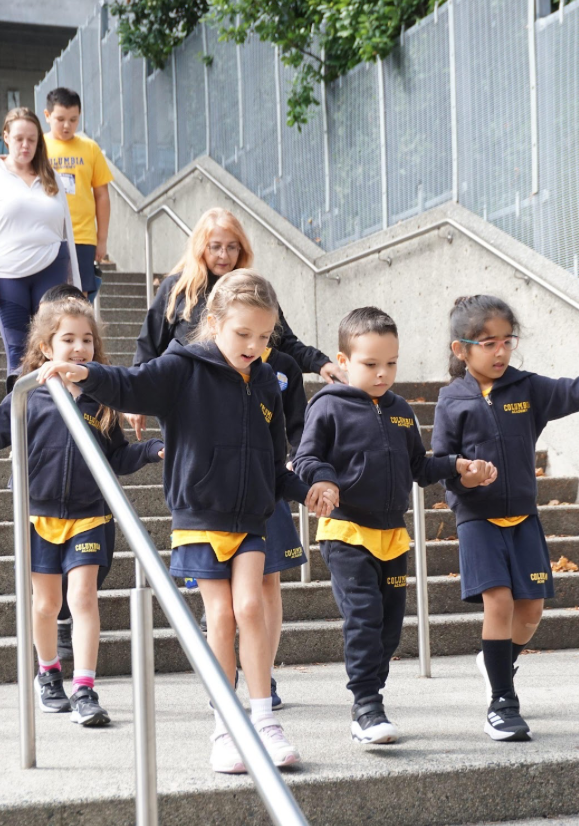
1. Critical Thinking & Problem-Solving: Learning How to Think, Not What to Think
In an age of instant answers, genuine problem-solving starts with curiosity. Columbia Academy students learn to ask why before they look for how.
- In the classroom: during math workshops, teachers guide students through open-ended problems, asking ‘What do you notice? What could you try next?’ This questioning process builds logic, persistence, and confidence.
- Hands-on inquiry: even our youngest learners use the high-school science lab for simple experiments, mixing solutions, testing predictions, learning that a ‘failed’ result still gives information. Over time, they begin to see challenges as something to explore, not avoid.
- Coding & design thinking: through external Apple Store workshops and in-class ADST projects, students practice breaking complex tasks into smaller steps, testing, and refining. They’re not just learning technology; they’re learning structured thinking for life.
2. Creativity & Adaptability: Thriving When Things Don’t Go as Planned
The ability to adapt matters more than ever. Studies show that creativity and cognitive flexibility directly support future academic and professional success. At Columbia Academy, we build those muscles early.
- Music as mental training: each child learns several instruments, such as recorder, ukulele, guitar, and piano, before choosing a focus. Switching among instruments challenges the brain to find new patterns and hand-eye coordination strategies, strengthening neural pathways linked to flexible thinking.
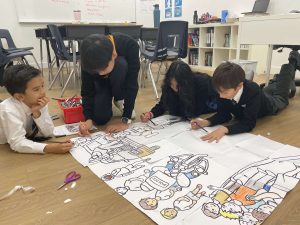
- Applied Design, Skills & Technologies (ADST): here, creativity meets practicality. Students plan recipes, build prototypes, or sew their own designs. Mistakes become part of the process: plan, test, revise. Teachers emphasize reflection, ‘What did you change and why?’, helping students see adaptation as success, not failure.
3. Empathy & Collaboration: Growing the Heart of a Leader
Emotional intelligence, understanding one’s own feelings and others’, is what transforms knowledge into leadership. Columbia Academy treats empathy as a skill that can be practiced daily.
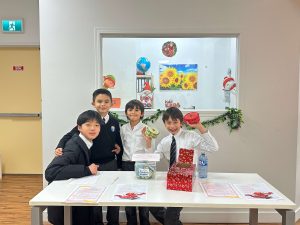
- Community connection: students lead charity drives for the Greater Vancouver Food Bank, collect books for local shelters, and perform for seniors’ homes. Planning these projects teaches organization and teamwork, but more importantly, it teaches perspective: realizing how one small act can brighten someone else’s day.
- In class: group projects and choirs become laboratories for collaboration. Children learn to listen, compromise, and celebrate shared success. Teachers model respectful dialogue, helping students develop communication skills that are just as vital as math or reading.
Parents often notice the change at home: children show more patience with siblings, more gratitude at the dinner table. That’s how social-emotional learning extends beyond school walls.
4. Resilience & Discipline: Balancing Effort and Emotional Well-Being
Resilience doesn’t mean ‘toughing it out.’ It means understanding emotions, managing frustration, and trying again with new strategies.
- Daily homework routines build consistency and self-management. Students learn to plan their time and take ownership of learning.
- Mindfulness practice: a Columbia Academy tradition since the school’s founding, complements that discipline. Each morning and afternoon, children pause for guided breathing or gratitude reflection. Teachers are trained in age-appropriate mindfulness education, helping students recognize when they feel anxious and use tools to calm themselves.
Together, structure and self-awareness create true grit: students who work hard and know how to recharge. In physical education, progress is measured by personal improvement, ‘three more push-ups than last month’, encouraging intrinsic motivation rather than competition.
5. Global & Cultural Fluency: Understanding a Bigger World
Vancouver is one of the most diverse cities on Earth, and our downtown Yaletown campus reflects that every day. Students grow up surrounded by multiple languages, cultures, and perspectives. It’s an invaluable classroom in itself.
- Early bilingual learning: from Kindergarten, children study French and Mandarin. This isn’t just language exposure; it’s training the brain to shift perspectives and appreciate that there are many valid ways to see the world. Research shows bilingual students demonstrate higher empathy and executive function, which are skills that last for life.
- City as classroom: frequent field trips to the Vancouver Art Gallery, Science World, and community events make cultural understanding tangible. Students learn to navigate real spaces, ask questions respectfully, and connect global issues to local action.
- Global citizenship in practice: through service and reflection, children learn that helping others, whether across the street or across the ocean, makes them part of something larger than themselves.
Why These Skills Work Together
These five competencies are not separate subjects; they weave through everything we teach.
- Critical Thinking + Empathy → understanding problems from multiple angles before acting.
- Creativity + Resilience → finding new solutions and sticking with them through setbacks.
- Discipline + Adaptability → staying focused while adjusting to change.
- Global Fluency + Collaboration → working effectively across cultures and perspectives.
When a Grade 5 student leads a charity project, they practice all of the above: planning (critical thinking), compassion (empathy), persistence (resilience), teamwork (collaboration), and cross-cultural understanding (global fluency). That’s what real-world learning looks like.
Conclusion: Preparing Children for Life, Not Just Tests
At Columbia Academy, academic excellence remains central, our students consistently perform above provincial standards, but we believe success is larger than a report card.
We measure growth in confidence, curiosity, kindness, and courage.
Our teachers, small-class setting, and downtown Vancouver environment make it possible to see every child as an individual with unique strengths to develop and a future to build.
Visit our campus to see future-ready education in action.
Observe a science inquiry session, a mindfulness circle, or a music ensemble where learning and joy intertwine.
→ For the latest updates on our programs, please refer to our brochure here