‘Your child’s brain will never be more ready to learn languages than it is right now.’
This statement isn’t just inspiring, it’s backed by neuroscience.
According to the Critical Period Hypothesis, the brain’s neuroplasticity peaks between ages 0 and 7, meaning children in this window can absorb new sounds, patterns, and structures effortlessly.
At Columbia Academy Elementary School, the only K-12 private school accredited by the BC Ministry of Education and located in downtown Vancouver, this opportunity is built into the curriculum.
Beginning at age 5, students simultaneously learn French and Mandarin, two of the world’s most influential languages, alongside English literacy. It’s a future-ready start that strengthens cognitive foundations and broadens cultural horizons.
The Science Behind Early Language Acquisition
Research from Harvard University and the U.S. National Institutes of Health confirms that early bilingual exposure enhances both neurological and cognitive development.
- Neurological advantages:
Young learners can distinguish subtle phonetic differences and recognize grammatical patterns with remarkable precision, establishing natural pronunciation and intuitive comprehension. - Cognitive benefits:
Bilingual children consistently outperform monolingual peers in executive function, creativity, and problem-solving. Their brains build flexible neural networks that make switching tasks easier, forming a lifelong advantage across subjects. - Long-term academic gains:
Studies link early bilingualism to higher standardized-test performance and university acceptance rates. In BC, more families are realizing that early bilingual programs at private elementary schools like Columbia Academy give children a measurable head start.
❓ What is the best age to start learning a second language?
Ages 0 to 7. when children’s brains are naturally wired for effortless absorption of sounds and grammar.
Why Public and Most Private Schools Start Too Late
In BC public schools, French Immersion typically begins in Grade 4 or 5, long after the prime learning window. Even many private schools don’t introduce a second language until Grade 2 or 3.
By then, the neuroplasticity window is closing, and so is the chance for effortless fluency. “By the time most BC schools introduce French, your child’s effortless-fluency window is already closing.”
That’s why families seeking a stronger academic foundation transfer to BC private elementary schools like Columbia Academy, where bilingual learning starts right from kindergarten.
Columbia Academy’s Trilingual Advantage: French and Mandarin from Kindergarten
At Columbia Academy’s Yaletown Campus, children receive a uniquely structured day that blends academic rigor with linguistic immersion.
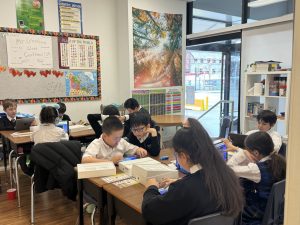
From the morning 8:15 a.m. reading block to the afternoon Mandarin session, students move between English, French, and Mandarin naturally through stories, lessons, and conversations.
This daily exposure develops balanced literacy across three languages while keeping learning joyful and age-appropriate.
Multilingual education builds the same discipline and confidence that later translate into academic success.

Why French and Mandarin? A Smart Choice for Global Citizens
French:
As Canada’s official second language, French opens doors to bilingual federal careers, Quebec universities, and the worldwide francophone community from Paris to Montréal to Geneva.
Mandarin:
With 1.3 billion speakers, Mandarin is the most spoken language on Earth and the language of one of Canada’s largest trading partners. It connects students with Asia’s innovation hubs and global business culture.
Learning both enhances meta-linguistic awareness, the ability to analyze and learn additional languages more efficiently. For BC families aiming to raise globally adaptable children, Columbia Academy’s trilingual model builds cultural intelligence from the very start.
Frequently Asked Questions
Q: Will learning three languages confuse my child?
A: No. Research shows multilingual children actually excel in focus and task-switching skills because their brains routinely practice selective attention.
Q: Does early bilingual learning affect English or math progress?
A: Not at all. Multiple studies demonstrate that bilingualism enhances cognitive flexibility and abstract thinking, supporting higher achievement in math and reading.
Q: What if my child struggles with new languages?
A: Columbia Academy’s small classes and licensed teachers offer personalized support and daily practice blocks so no child is left behind.
Q: Is the program only for families who speak Chinese or French at home?
A: No prior experience is needed. All students start with beginner-friendly immersion and learn through games, songs, and stories.
Beyond Languages: The Columbia Academy Elementary Experience
Language fluency is just one part of a holistic education. Columbia Academy’s elementary program nurtures mind, body, and character equally:
- Personalized teaching and small classes ensure every child receives individual attention.
- Daily homework cultivate discipline and curiosity.
- Music and Arts: Each student learns 3–4 instruments (recorder, ukulele, guitar, piano) and joins choir and performance training.
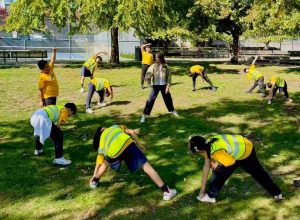
- Mindfulness & Yoga: Part of daily routine to build calm focus and emotional balance.
- Charitable activities: Students regularly join local fundraisers and food drives, building empathy and leadership.
- Downtown Location: Steps from Vancouver’s museums, art galleries, and Apple Store workshops, the city becomes an extended classroom.
Early bilingualism is the foundation, but Columbia Academy’s holistic environment turns it into lifelong confidence and global competence.