For families searching for kindergarten Vancouver BC options, the word “interview” can feel intimidating. Many parents wonder:
- “What if my child is too shy?”
- “What if they don’t follow instructions perfectly?”
- “Is this a test?”
At Columbia Academy, we want to reshape that understanding.
A kindergarten admissions interview is not an exam, not a screening, and not a moment where a child can “fail.”
Instead, it is a gentle, play-based, collaborative conversation: a way for educators and families to understand how we can best support your child’s developmental journey.
This guide explains exactly what happens (and what doesn’t happen) during the kindergarten admissions process, and how to help your child feel confident, safe, and excited.
1. A Partnership, Not a Test
At Columbia Academy, the only independent K–12 school in downtown Vancouver, the admissions interview is built on a simple belief:
A child cannot ‘fail’ at being themselves.
Instead of testing knowledge or performance, we use this moment to understand three essential things:
- Who your child is today
- What excites or comforts them
- What kind of environment will best support their growth
Children develop at different paces, and that is expected. Our role is to help identify the path where your child will feel supported, confident, and ready to thrive.
3. What to Expect: A Play-Based, Child-Centered Experience
The kindergarten admissions interview feels more like a relaxed school visit than an evaluation.
Step 1: Warm-Up Play
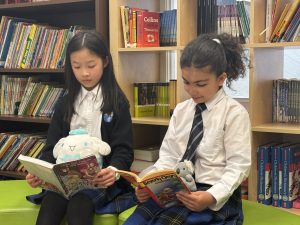
Children begin with blocks, picture books, or drawing, designed to help them settle comfortably.
Teachers simply observe:
- Do they explore?
- Do they warm up gradually?
- Do they interact with materials with curiosity?
Step 2: Gentle Guided Activities
Our educators may join the play:
- “What are you building?”
- “Can you show me the red block?”
- “Would you like to draw something for me?”
This is not about right or wrong answers, we are observing communication, comfort, and engagement.
Step 3: Parent Conversation
While your child plays, we speak with you.
This is where your insights matter most:
- Your child’s personality
- What comforts or motivates them
- Family routines
- Languages spoken at home
- What kind of school environment you’re envisioning
We enroll families, not just children, partnership is essential.
Step 4: Optional Mini Campus Tour
Families may see our Yaletown facilities:
- Library
- Music rooms
- Outdoor plaza
- Art room
All reflecting Columbia Academy’s rich offerings in literacy, arts, physical education, and field trips .
4. What We Look For: The Five Areas of Readiness
We observe children through a lens of growth, not judgment.
1. Social & Emotional Readiness
- Interaction with teachers
- Comfort separating from parents
- Ability to participate with guidance
- Resilience during small challenges
These align with CA’s emphasis on communication, gratitude, responsibility, and resilience across K-12 .
2. Early Language Development
- Understanding simple instructions
- Using basic vocabulary
- Showing interest in books or storytelling
CA reinforces this through daily reading and early Mandarin/French exposure starting at kindergarten.
3. Cognitive Curiosity
- Recognizing patterns
- Sorting objects
- Age-appropriate problem-solving
4. Motor Skills for Classroom Independence
- Holding crayons
- Turning book pages
- Building with blocks
5. Learning Behaviours
- Taking turns
- Following familiar routines
- Attending to short activities
These skills are foundational for our small-class elementary setting.
5. The Big Question: “What If It’s Not a Yes Right Now?”
This is the part parents fear most, but shouldn’t.
An admissions decision is not a verdict on your child’s potential.
It is simply an evaluation of fit and timing.
If certain readiness skills are still emerging, we may recommend:
- additional time for growth
- a different pace of environment
- or a later start date
Our goal is to preserve your child’s confidence.
Placing a child in a setting they are not developmentally ready for can create unnecessary stress.
Our admissions process exists to protect your child’s early love of school, not challenge it.
6. How to Prepare Your Child
✔ Frame It as a Visit, Not a Test
Say:
“We’re going to visit a school and play with some kind teachers.”
✔ Read Together Daily
This builds vocabulary and emotional closeness, perfectly aligned with CA’s daily reading culture .
✔ Visit New Spaces
Trips to:
- Vancouver Public Library
- Science World
- Art Gallery
help children feel comfortable with unfamiliar adults and environments.
✔ Encourage Small Independence
Putting on jackets, tidying toys, carrying their backpack, all signal developmental readiness.
7. Why Many Families Choose a K-12 Path from the Start
Starting in a K-12 environment like Columbia Academy gives your child:
- Stability from kindergarten to graduation
- A long-term, deeply supportive community
- No Grade 8 transition stress
- Teachers who understand their growth journey
- Continuity in habits, expectations, and academic culture
This stability is one of CA’s strongest advantages.
Learn more: Why K–12 Continuity Matters for Long-Term Success
Conclusion – Let’s Find the Best Path Forward, Together
The kindergarten admissions interview is not about performance, it’s about partnership.
Whether your child joins us this year or at a later stage, we are honoured to help guide your search for the right educational environment.