When families begin looking for educational options for their children, one clear choice that often comes up is the kindergarten to grade 7 private school. What exactly differentiates it from public schools or other options, and why might it be the right fit? Columbia Academy, a private K-12 school with a strong elementary (K-7) program in downtown Vancouver, offers a powerful example of what these schools can offer. Drawing from Columbia Academy’s model and comparing with top practices across private elementary schools, here are the key advantages, and what to look for when choosing a private school for grades K-7.

Why choose Columbia Academy?
- Columbia Academy is the only K-12 private school located in downtown Vancouver.
- Founded in 2014, licensed by the BC Ministry of Education and offering the certified BC K-12 curriculum.
- Operates two campuses in downtown Vancouver (Elementary and Secondary).
- An academically focused elite school that also emphasizes volunteer service, academic competitions, and extracurricular activities.
- 100% of graduates are accepted into universities, with about 90% admitted to the world’s top 50 universities.
- Offers Advanced Placement (AP) courses and is an official AP test center.
- Dedicated to providing an immersive learning experience, developing students’ social, emotional, intellectual, artistic, physical, and social responsibility skills.
- Aims to cultivate future global leaders.
1. Personalized Learning & Small Class Sizes
One of the biggest advantages of a kindergarten to grade 7 private school is smaller class sizes. Teachers can spend more individual time with each child, tailoring instruction to where they are academically, socially, and emotionally. Columbia Academy emphasizes this: licensed teachers guiding students in small-class environments, allowing more personalized attention.
Research and many expert sources illustrate that smaller classes lead to improved outcomes: higher academic achievement, better student engagement, and more chance for feedback.
2. Strong Academic Foundations
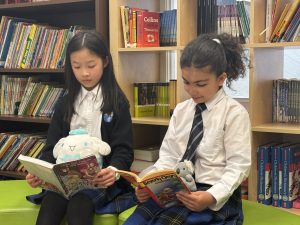
A private elementary school typically places a strong emphasis on foundational skills—reading, language arts, mathematics. Columbia Academy’s program focuses on daily reading, nightly reading assignments, building reading habits, plus early‐second‐language (French and Chinese) starting in Kindergarten. This kind of early exposure builds confidence and broad cognitive skills.
Best schools also deliver rigorous curriculums, academic challenges, and clear pathways for advancement. Parents of private school students often cite academic rigor as a major reason for choosing private over public schooling.
3. Holistic Development: Arts, Music, Character & Community
Beyond reading and maths, the best private K-7 schools offer a broad curriculum. Columbia Academy, for example, includes music (instruments, choir, performance), visual arts, dance, and many extracurriculars. Such enrichment helps students develop creativity, social skills, emotional intelligence, and confidence.
Also important are community, character, and values. Private schools often include charitable work, community service, clubs, mindfulness or wellness programs. Columbia Academy organizes food drives, charity events, material donations and field trips (e.g. to museums, to aquarium, etc.). These elements help children grow not just academically but socially and ethically.
4. Supportive Environment & Individual Attention
In a private K-7 setting, there tends to be greater teacher continuity and more stable student-teacher relationships. Teachers and staff can more readily notice each child’s strength and areas for growth, both academic and emotional. This kind of holistic support helps children transition through early years more smoothly.
Columbia Academy, for instance, highlights daily homework, teacher teams, personalized feedback. Such features are common among private elementary schools that aim to offer strong foundational skills and help students build habits of discipline, resilience, and empathy.
5. Enriched Facilities & Resources
Private elementary schools often have access to better facilities: dedicated music rooms, labs, arts rooms, performance spaces, well-equipped classrooms. Columbia Academy touts professional music classrooms, grand pianos, dance studios, outdoor plazas, gyms, art rooms, computer labs, etc.
These resources allow experiential learning: field trips, hands-on STEM, performance and arts, sports, wellness, all of which help engage students and foster diverse skills.
6. Preparation for Advanced Education & University Pathways
Parents often choose K-7 private schools because they lay the groundwork for strong performance in middle and high school, and ultimately, post-secondary institutions. Columbia Academy boasts that 100% of its students have been accepted to universities and 90% to top universities worldwide. Even though K-7 is an early stage, establishing solid academic habits, exposure to challenging content, second languages, arts, etc., helps in long-term success.
Other schools with K-7 programs in Vancouver (e.g. Collingwood School, Mulgrave) are similarly lauded for their rigorous academic programs and quality of facility and instruction.
7. What to Look for in a Quality Kindergarten to Grade 7 Private School
If you’re evaluating a private elementary (K-7) school, here are criteria that matter:
- Accreditation & Governance: Check that the school is certified by the relevant education authority (e.g. BC Ministry of Education), and operates transparently (bonded, not-for-profit if relevant). Columbia Academy is fully certified and bonded.
- Teacher Qualifications: Licensed, experienced teachers, small class-teacher ratios.
- Curriculum Balance: Strong basics in reading, writing, maths; second language; arts; music; physical education; social studies; STEM.
- Enrichment & Extracurriculars: Clubs, performance, sports, community service, field trips.
- Facilities & Infrastructure: Music rooms, computer labs, gym, library, art & dance studios, safe and engaging outdoor spaces.
- Community & Values: Look for schools that foster character, empathy, volunteerism, emotional well-being.
- Academic Results & University Readiness: Even though young, check track record; how do students do later?
8. Is It Worth the Investment?
Tuition for private education is higher than public schooling, but many families find the return in academic performance, personal growth, smaller classes, enriched environments, and overall readiness for high school and beyond to be worth it. Studies and many school-blogs confirm that families perceive private elementary school as a valuable investment, especially when it includes all the features above.